Coping With Post-Wisdom Teeth Surgery “Chipmunk Cheeks”

Having surgery to extract your wisdom teeth is often a necessary procedure, and many people who have had these teeth removed have experienced chipmunk cheeks. Just because it’s completely normal, though, doesn’t mean it’s pleasant. Keep reading if you want to know more about:

  • What Causes Chipmunk Cheeks After Wisdom Teeth Removal?
  • How Can You Reduce the Swelling?

What Causes Chipmunk Cheeks After Wisdom Teeth Removal?

If you’re wondering why your cheeks are swollen post-surgery, think about any other injuries you may have had in your life. An ankle swells after rolling your foot, as does your head after being hit with a ball.

Now that you’ve thought of those examples, let’s go back to your cheeks after wisdom teeth surgery. This oral procedure involves a dental professional cutting and digging in your gums in order to extract the teeth. Naturally, your cheeks will swell after the surgery is over.

Swelling is the body’s natural reaction to an injury. Specifically, acute swelling — swelling that takes place within 24 hours — is what occurs after you have your wisdom teeth removed. Your body is attempting to heal the parts that have been damaged, which are in this case in your mouth.

Lady Gaga shows off her chipmunk cheeks after having her wisdom teeth removed. She sits in bed and holds a stuffed monkey.
Lady Gaga posted this picture of herself on Twitter when she had her wisdom teeth removed back in 2014 with the caption “Chipmunk Cheeks. Wisdom Teeth out before tour. I can’t eat. I’m gonna put some meatballs in a blender.” Notice how she keeps her head elevated to reduce the swelling. Image courtesy of Twitter.

How Can You Reduce the Swelling?

Usually, you won’t notice any swelling until the day after your surgery. It reaches its peak 2 to 3 days after and can remain for a few days, which is nothing to worry about. Your chipmunk cheeks should be completely gone within a week.

While swelling around your cheeks, mouth, and sides of your face is inevitable, there are ways to reduce it, like:

  • Taking corticosteroids
  • Applying ice and heat to your face (at different times, of course)
  • Elevating your head 

Corticosteroids 

Cortisone-like medicines are used to treat redness, itching, and other symptoms of diseases like skin problems or asthma. You might be wondering how they can help people who have had their wisdom teeth removed. As it turns out, another function of corticosteroids is to reduce swelling. 

A study done in 2016 concluded that corticosteroids can help combat swelling, pain, and lockjaw in patients who have had their wisdom teeth extracted. While corticosteroids leave the bloodstream within 24 hours, the effects can last for up to three days. Before taking anything, talk to your dentist first.

Ice, Ice, Baby

During the first 24 hours post-surgery, you’ll want to apply ice packs to the outside of your face. Place an ice pack on the area for 15 minutes, then leave it off for 15 minutes. Repeating this process will help reduce the swelling.

A woman holds a blue ice pack to the left side of her face. Her eyes are closed and her face seems in pain.
You can apply ice packs to the affected areas practically as soon as the surgery is finished. Image courtesy of Vital Record.

Just Heat It 

Like mentioned previously, swelling peaks 48 to 72 hours after the surgery. When applying heat to your face, make sure it’s not too hot, as you don’t want to burn yourself. 

The process of applying heat to your face is relatively the same as applying ice packs, except you can apply heat for 5 extra minutes. Wrap a heating pad or a hot water pad in a towel and place it against your cheeks. Keep it on for 20 minutes, leave it off for 20 minutes, then repeat.

Keep Your Head Up

Elevating your head is one of the most important things you can do after you’ve had your wisdom teeth removed. This means sleeping with your head elevated and keeping your head up throughout the day, as this allows the fluid to drain from your face.

Sleeping with your head propped up with multiple pillows can help decrease the chipmunk cheeks. However, don’t be alarmed if you wake up one morning and your cheeks are more swelled than the night before — it’s normal to have more swelling in the morning.

A woman sleeps, using one pillow and a wedge-like pillow to elevate her head.
Using multiple pillows when you sleep can help keep the swelling contained, as gravity can pull the fluid resting in your face out and into other areas of the body. Image courtesy of Snoring New Zealand.

While post-wisdom teeth surgery chipmunk cheeks are not the most pleasant thing to experience, the healing process is relatively quick, usually lasting only a week or a week and a half. If it’s past that time frame and you’re still experiencing swelling, contact your dentist, as there might be a problem. Otherwise, if you adhere to the advice in this article, you should be good to go.
The 7 Best Fluoride-Free Toothpaste Brands

Fluoride is a naturally occurring mineral found mainly in water sources and also in plants. A certain level of fluoride is healthy, as it keeps teeth strong and can help prevent cavities. With children specifically, too much fluoride can lead to dental fluorosis, staining of the teeth marked by spots or lines — if you have children, especially those under the age of two, make sure they use fluoride-free toothpaste

Too much fluoride in adults is also dangerous, as it can lead to neurological problems, thyroid problems, and more. If you’re allergic to fluoride, you’ll definitely want to use fluoride-free toothpaste. Anyone can use fluoride-free toothpaste, though, but which companies even make such a thing? To help you out, we’ve compiled a list of the 7 best fluoride-free toothpaste options on the market. 

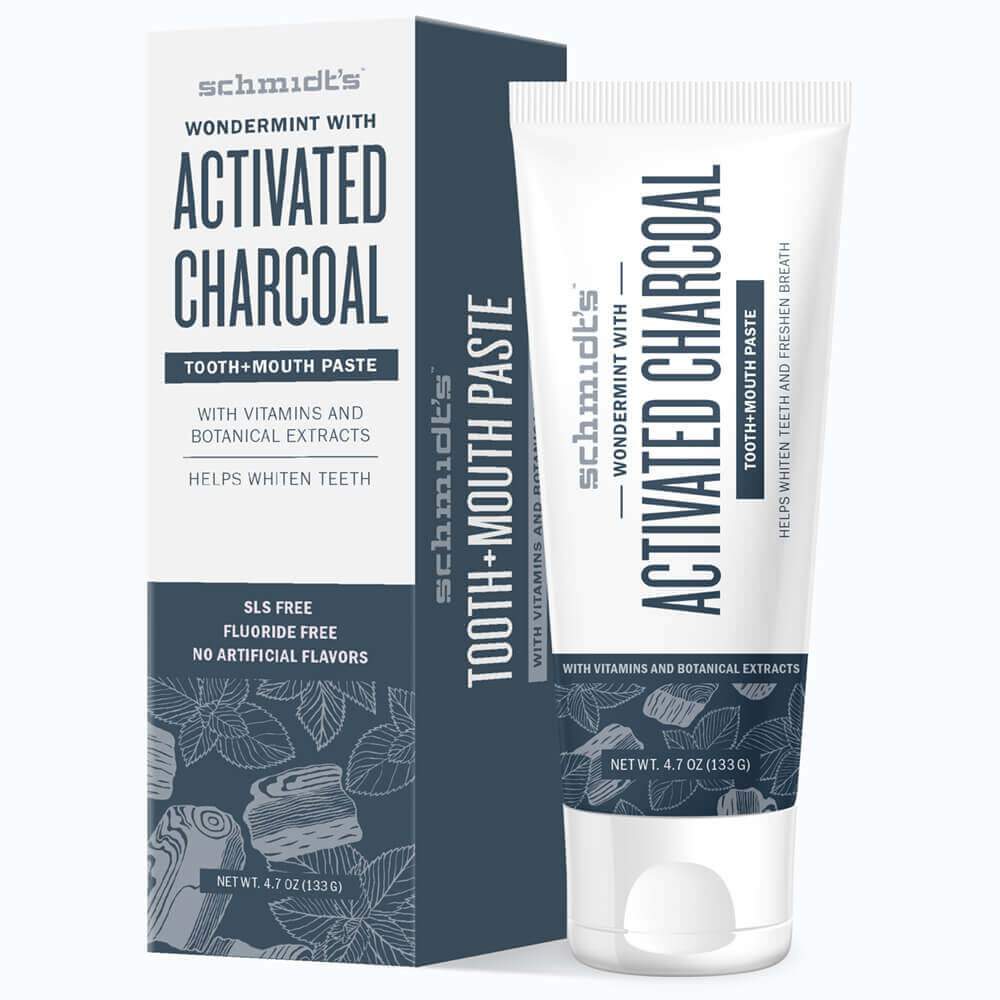
Schmidt’s Wondermint with Activated Charcoal

All Natural and Fluoride-free 

A blue and white box and a tube of Schmidt's Wondermint Activated Charcoal toothpaste are pictured here.
Image courtesy of Schmidt’s.

Schmidt’s plant- and mineral-based personal care products have been around since 2010. Unlike other brands’ charcoal toothpaste, Activated Charcoal Wondermint toothpaste is gray in color. Minty and cool, it leaves your mouth feeling fresh and clean.

Tom’s of Maine Fluoride-Free Antiplaque & Whitening Toothpaste in Peppermint

Trusted Since 1970

Tom's of Maine Fluoride-Free Antiplaque & Whitening toothpaste and box are pictured.
Image courtesy of Rite Aid.

Tom’s of Maine produces sustainable, organic personal care products. Their Fluoride-Free Antiplaque & Whitening Toothpaste in Peppermint contains no artificial flavors, colors, or preservatives, and is not tested on animals. They even have an “Ingredients” section on the product’s page that details the purpose and source of each ingredient. This way, you know exactly what makes up your toothpaste and can rest assured there are no harmful additives.

Earthpaste

Become a #MudMouth

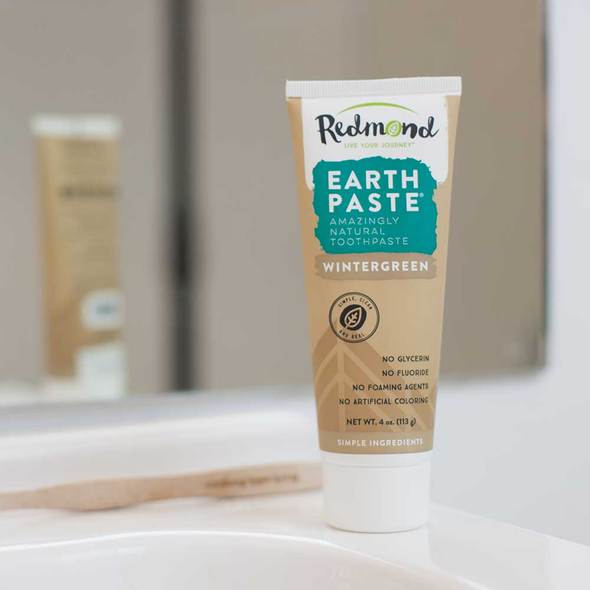
A brown tube of Redmond Wintergreen Earthpaste sits next to a toothbrush.
Image courtesy of Earthpaste.

The creators of Earthpaste were unhappy with the toothpaste options on the market, so they decided to make their own, free of added chemicals and preservatives. All-natural Earthpaste toothpaste prides themselves on using only five main ingredients for their toothpaste:

  • Water
  • Redmond Clay
  • Xylitol
  • Essential Oils
  • Real Salt

On their FAQ page, they even have sections dedicated to why they don’t include fluoride, glycerin, and foaming agents in their products. When it comes to ingredients, simplicity is key.

LEBON Toothpaste

Fantastically French 

Multiple gold tubes of LEBON toothpaste sit next to each other.
Image courtesy of Storm Fashion.

The eco-friendly, French brand LEBON uses only ethical and natural ingredients in their toothpaste. Each flavor of toothpaste — which ranges from Villa Noacarlina to Tropical Crush — contains organic aloe vera and green tea. LEBON, too, has an ingredients list on their website, specifying ingredients of each flavor of toothpaste. Most importantly, they’re all fluoride-free.

Desert Essence Pink Himalayan Salt and Tea Tree Oil Toothpaste

Beauty Is Natural

A box and a tube of Desert Essence Pink Himalayan Salt Toothpaste are shown.
Image courtesy of Lucky Vitamin.

Desert Essence’s Pink Himalayan Salt and Tea Tree Oil Toothpaste is carrageenan-free, contains 84 minerals in the salt, and keeps your mouth healthy. Since 1978, the company has used all-natural ingredients and are committed to forward-thinking when it comes to their process and products. Don’t be deterred by the Himalayan Salt — the toothpaste is flavored with creamy mint that will leave your mouth fresh.

Hello AM/PM Fluoride-Free Bundle

Say Hello to Fluoride-Free Toothpaste

Both the AM and PM toothpastes sit on a counter in front of a toothbrush container.
Image courtesy of Hello.

Hello offers an AM/PM (awesome morning, perfect midnight) bundle. The AM toothpaste is antiplaque and whitening, and the PM toothpaste is activated charcoal — both are fluoride-free. Plus, you get a free gift with every order.

Davids Premium Natural Toothpaste

Clean, Safe, Non-Toxic Ingredients

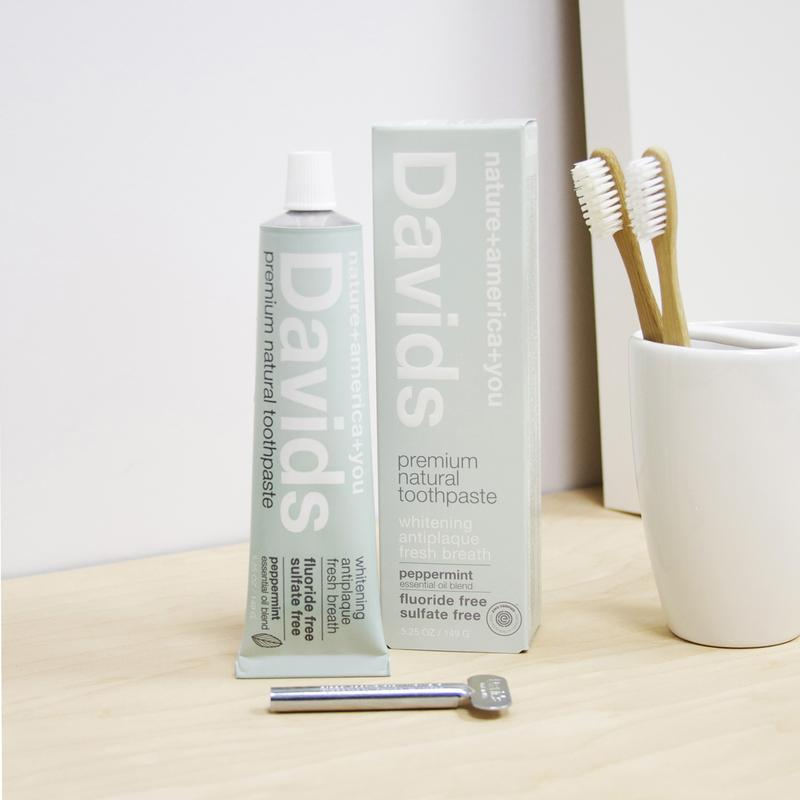
A gray box and a gray tube of Davids toothpaste sit on a counter next to a toothbrush holder.
Image courtesy of Davids.

Davids prides themselves on their toothpaste made with safe, non-toxic ingredients. Products are made in the United States, and 98 percent of the ingredients are USA Origin. The toothpaste tube itself is metal — so it can be recycled — and comes with a metal tube key so you can get every last bit of toothpaste.

With the concern surrounding fluoride, you might want to opt for a toothpaste that doesn’t contain the mineral. These are 7 quality, fluoride-free toothpaste brands that are all well-known and trusted by many. Try one today!

Header image courtesy of Coburg Dental Group.

What To Do If Your Tooth Still Hurts After A Filling

People get dental fillings for a multitude of reasons — cavities, a small hole in the tooth, and tooth discoloration are only a few. A dentist removes the decay from a tooth then fills the space with a different material, like gold or porcelain. Immediately after a filling, you might not feel anything due to the numbing agent. 

However, once that wears off, be aware that some pain, discomfort, and sensitivity is normal after you get a filling. Those feelings should go away within a few days. If they don’t, that’s when you might have a problem. In this article, we’ll talk about:

  • What Causes Tooth Sensitivity?
  • Identifying and Treating the Problems

What Causes Tooth Sensitivity?

Immediately following the procedure, you might not feel anything at all because of the numbing agent used. However, once that wears off, you will probably start to experience moderate sensitivity. There are a few things that might trigger this sensitivity, such as:

  • Cold foods and drinks, like ice cream
  • Hot drinks, like coffee
  • Acidic foods and drinks, like juice
  • Sugary foods, like candy
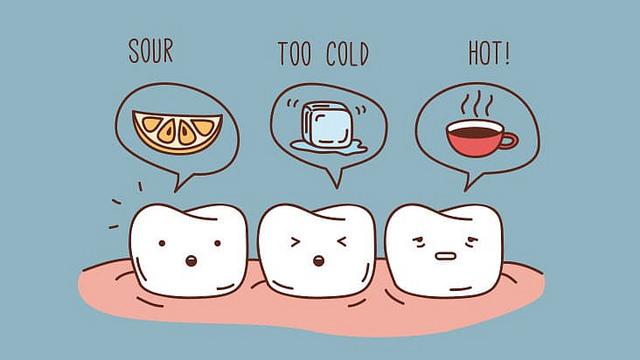
From left to right, three animated teeth think sour, too cold, and hot!
Certain foods and drinks might trigger an uncomfortable sensation. Take note of these triggers and try to avoid them as much as possible. Image courtesy of College Plaza Dental.

One way you can reduce tooth sensitivity is to use a desensitizing toothpaste. While the toothpaste does not work immediately after the first use, continual brushing with it can ensure results. When brushing, do so gently. Harsh scrubbing won’t help your teeth feel better.

Flossing regularly, not using whitening products, and rinsing your mouth out after eating acidic foods are other ways to help reduce sensitivity. Oral hygiene routines are essential for strong, healthy teeth.

Identifying and Treating the Problems

Like previously stated, symptoms of discomfort, sensitivity, and pain should go away within a few days to a week. If they don’t, there might be a bigger problem at hand. Let’s take a look at why you might still be experiencing pain and/or sensitivity.

Incorrect Bite Alignment

Sometimes, a filling isn’t positioned as properly as it should be and thus can interfere with your bite. If it’s too high, it can cause a malocclusion, which can cause pain when you bite down. The extra pressure from the misaligned filling is the cause of this pain.

To fix this issue, your dentist will smooth down the filling so it lines up properly with your other teeth. Then, you should be back to normal.

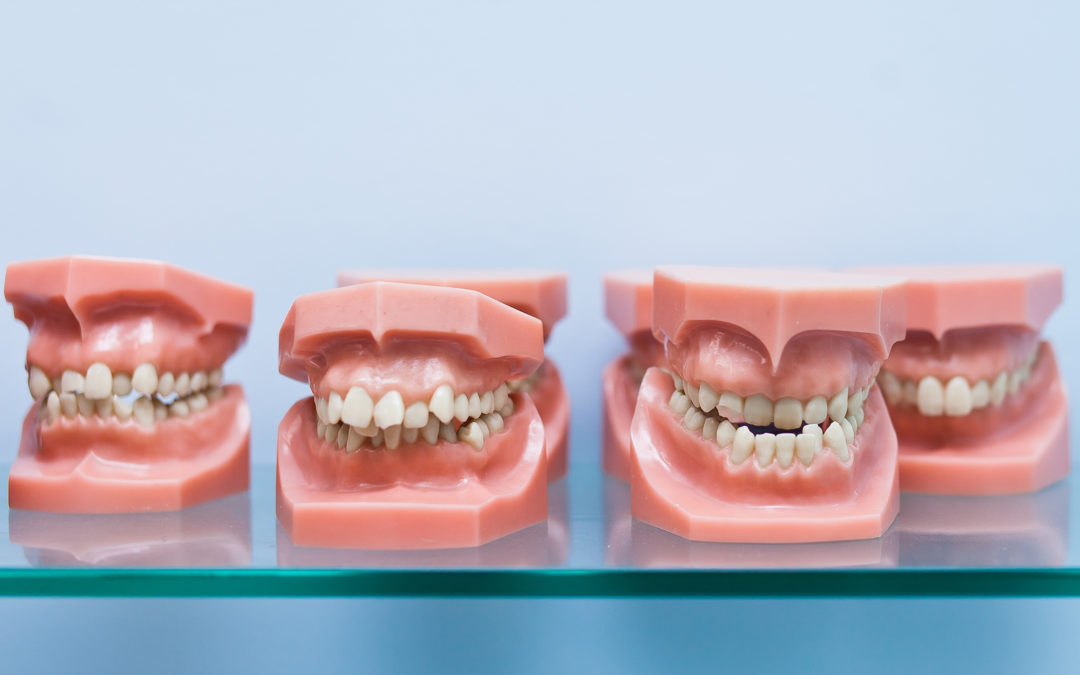
Four teeth models each show different overbites/teeth positions.
Extra pressure on the filled tooth can cause you pain, especially when eating. Image courtesy of Dr. Greg Wych.

Pulpitis

Pulpitis is the inflammation of the pulp tissue that forms the center of your teeth. Normally, pulpitis is not a result of a minor filling. A few symptoms of pulpitis are swelled gums, pain when eating, and a pocket of pus near your tooth.

There are two types of pulpitis:

  • Reversible Pulpitis → a mild inflammation from which the tooth can heal on its own.
  • Irreversible Pulpitis → an inflammation that is so severe that nerves can be damaged, or can even start to die. 

Antibiotics can be used to clear the bacterial infection of reversible pulpitis. To fix the irreversible pulpitis, you will most likely need a root canal. In a dire case, you may even have to have the tooth extracted.

Allergic Reaction to Tooth Fillings

Sometimes, you might not know you’re allergic to a certain material, such as silver. If your dentist uses silver amalgam as the filling agent, you might experience an allergic reaction. Symptoms include itchiness and/or a rash. Talk to your dentist if you think you’re experiencing an allergic reaction.  

The best way to avoid this is to inform your dentist of any allergies you may or may not have before your procedure.

A woman in a dentist's chair holds her face and looks at a dentist with his back to the camera.s
If tooth sensitivity does not go away within 2 to 4 weeks, you should get in touch with your dentist. Image courtesy of Savina Clinic.

Multiple Tooth Surfaces

If you get a silver amalgam filling on the tooth above or below a tooth that has, for example, a gold cap, you might experience some sensitivity. There isn’t much your dentist can do, but they can try to find a material that won’t be as irritative to your pre-existing cap.

If you’re experiencing pain, discomfort, and/or sensitivity after a filling, you may have a problem on your hands. There’s no need to worry, though! Elizabeth Wakim, DDS, and staff are dental professionals who can help you feel your best again.

Header image courtesy of The Telegraph.

Go Pro — Why You Should Only Get Your Teeth Professionally Whitened

In 2018, about 40.5 million people in the United States used some form of whitening product. However, a recent study has revealed a dark truth behind teeth whitening strips — they can actually harm your teeth. That being said, if you’re considering having your teeth whitened, skip the drugstore products and visit a professional. In this article, we’re going to cover two main points:

  • How Do Whitening Strips Harm Teeth?
  • Why You Should Always Go to a Professional

How Do Whitening Strips Harm Teeth?

The Three Layers of a Tooth

To begin, we’re going to go over a tooth’s three layers so that you can best understand how whitening strips harm teeth. 

  1. Enamel → the outermost, hardest layer that protects the inner layers
  2. Dentin → the middle layer containing 90-95 percent percent of collagen, a protein that binds teeth together
  3. Pulp → the innermost layer made mainly of connective tissue
Two diagrams of a tooth are shown. One shows the outside view, and another shows the inside view, labeling all parts of the tooth.
The hydrogen peroxide in store-bought whitening strips and rinses damages not only the enamel, but also the dentin. What if it even made its way to the pulp cavity? Image courtesy of Carifree.

The Harmful Ingredients of Whitening Products

The main ingredient of whitening products is hydrogen peroxide, which is also the main ingredient of bleach.

A recent study led by Kelly Keenan, an associate professor of chemistry at Stockton University in New Jersey, has shown how hydrogen peroxide can penetrate the dentin layer of a tooth. Keenan and her team placed whitening strips on extracted human teeth from cadavers and recorded their observations.

The team compared the teeth to a control group of teeth that had not been whitened. What they found was a decreased level of proteins, mainly collagen, in the teeth that had been given the whitening strips. Keenan said she would like to look further into if the damage caused by whitening strips is permanent or if it might be reversible.

Other Effects of Whitening Products

Some people who use store-bought whitening products experience side effects, like tooth sensitivity. In one study conducted by Hasson et al., a range of 8 to 41 percent of people experienced tooth sensitivity.

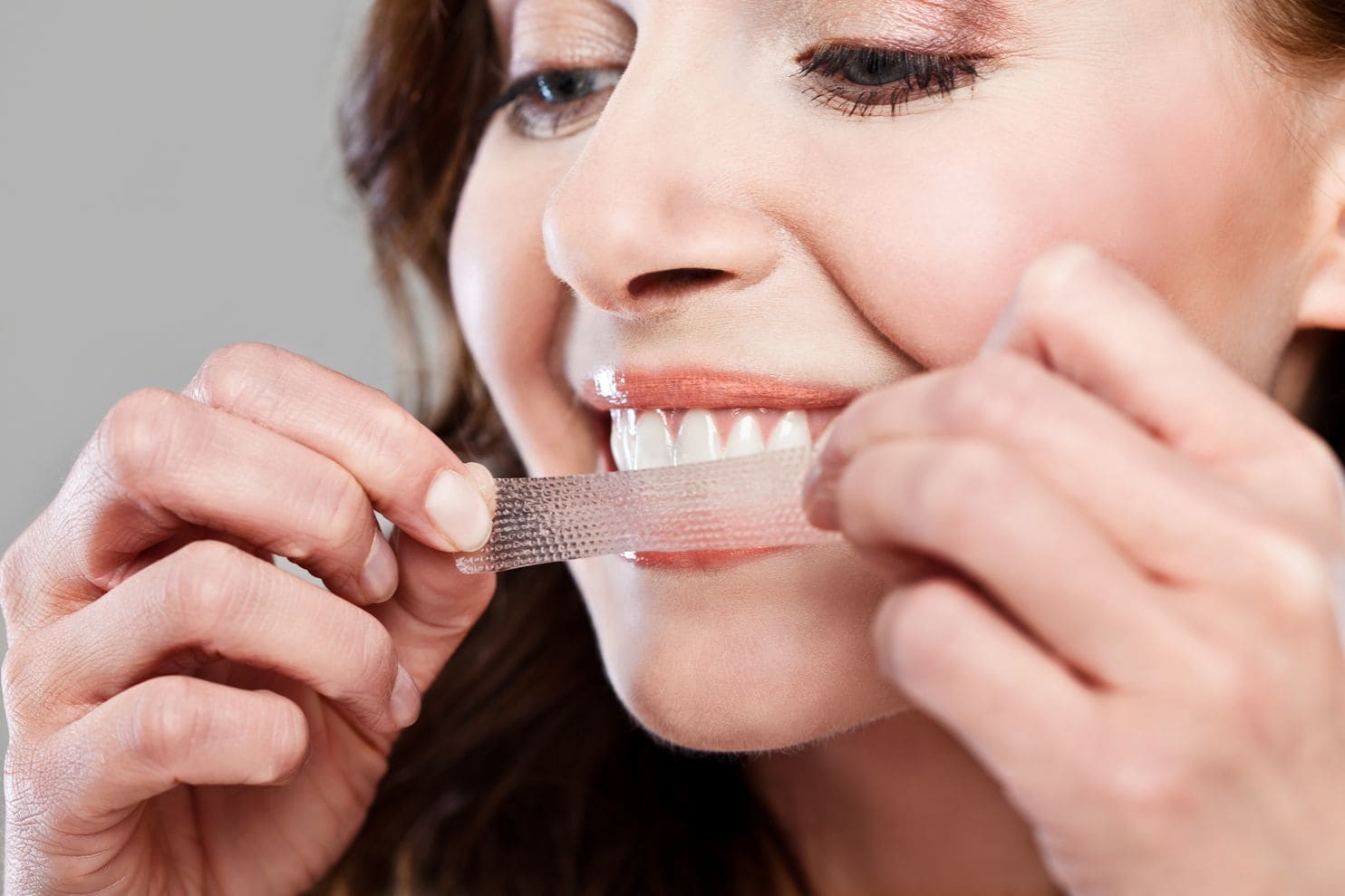
A woman prepares to place a whitening strip on her teeth.
Improper placing of your whitening strip may cause unpleasant side effects. Image courtesy of The Washington Post.

Another common side effect is gingival irritation, which occurs as a result of hydrogen peroxide coming in contact with the gums. This can happen if you don’t place the whitening strip properly on your teeth. If you accidentally swallow some of the whitening product, this can cause irritation of your throat and can even make you nauseated. 

Dental crowns, bridges, implants, and porcelain veneers will not whiten. If people with any of these dental implants use whitening strips or rinses, they have to understand that the implants will not change color. Speaking of rinses, long-term use of a whitening teeth rinse can deplete the amount of helpful bacteria in your mouth. 

Why You Should Always Go to a Professional

If you accidentally sliced your finger while cooking, you wouldn’t attempt to stitch yourself. Instead, you’d go to a professional, as you are certain they know what they’re doing. So, why would you attempt to whiten your teeth on your own?

While the two scenarios are a little bit different in terms of extremity, the point remains — always go to a professional for the important things. 

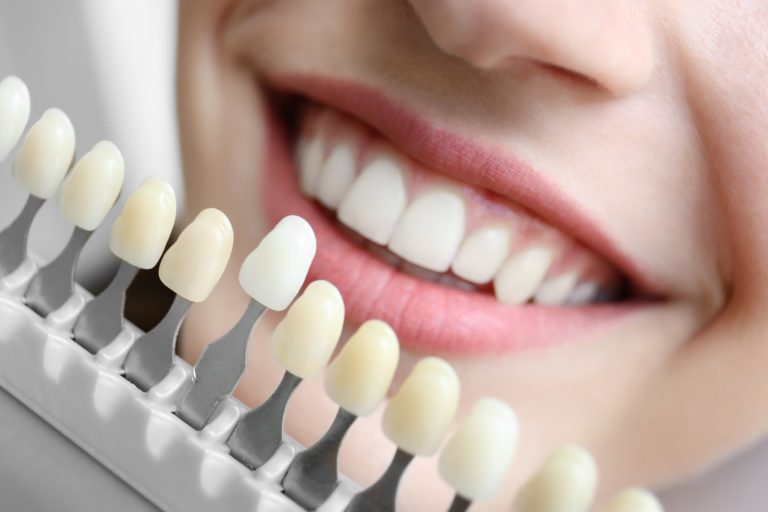
A woman smiles as she looks at the color options for her teeth.
Having your teeth whitened professionally means that you will receive the safest, most advanced treatment possible. Image courtesy of USA Today.

Longer Lasting Results

People who use store-bought whitening products often notice their teeth don’t stay whiter for that long. In fact, some people see this happen in as little as a week. Why put in all that effort for just a week of results?

When you get your teeth whitened professionally, you’ll notice your teeth stay whiter for longer. Results can even last up to three years! People who don’t use tobacco products or consume food or drinks that have the potential to stain teeth — like tea, coffee, and red wine — are more likely to have their results last this long. And, naturally, proper oral hygiene practices are always important.

Personalized Care with the Best Products

Store-bought whitening kits are not personalized, but everyone’s teeth are different. Getting your teeth professionally whitened means that you will receive the treatment right for you and you alone. Your dentist will also use the safest, most up-to-date procedures, techniques, and products out there. 

When you visit a dentist who knows how to professionally whiten teeth, like Elizabeth Wakim and her staff, you know you will be in good hands. Your teeth are essential for eating, speaking, keeping your jaw strong, and plenty of other everyday functions. Why not treat them as best as you can?

Header image courtesy of Highmoor Dental.

How To Tell If You Have Gum Disease And What You Can Do To Treat It

Gum disease is a prevalent condition in the United States, with an estimated 42 percent of adults over the age of 30 suffering from it. In 2016, severe periodontal disease was the 11th most prevalent disease globally. While there are telltale signs of gum disease, sometimes it can go unnoticed during the first stages. So, how do you know if you have gum disease? And if you do, what can you do about it? In this article, we’ll go over:

  • Causes of Gum Disease
  • The Three Stages of Gum Disease
  • Treatment Options

Causes of Gum Disease

Poor Oral Hygiene

One of the two main causes of gum disease is poor oral hygiene. If people do not properly and regularly brush and floss their teeth, plaque — a sticky film made up of bacteria, mucus, and other particles in our mouth — begins to build up. If left untreated, the plaque will harden and form tartar, which cannot be removed via brushing.

Two teeth are shown side by side. The tooth on the left is healthy and white. The tooth on the right has plaque on it, and the gums around it are inflamed.
Controlling plaque buildup can reduce the risk of gum disease. Image courtesy of Aetna.

Brushing twice a day and flossing once a day can reduce your risk of gum disease.

Use of Tobacco

The second main cause of gum disease is the use of tobacco. Acute Necrotizing Ulcerative Gingivitis (ANUG) — also known as Vincent’s disease and “trench mouth” — is a common issue in smokers. This painful, rapidly progressing form of gingivitis is characterized by bleeding gums, ulcers, and bad breath.

Smoking, chewing, and other forms of tobacco use can even make treatment less successful. Dentists will often recommend quitting smoking or chewing in order to make treatment more effective.

The Three Stages of Gum Disease

There are three stages of gum disease, which are gingivitis, periodontitis, and advanced periodontitis. 

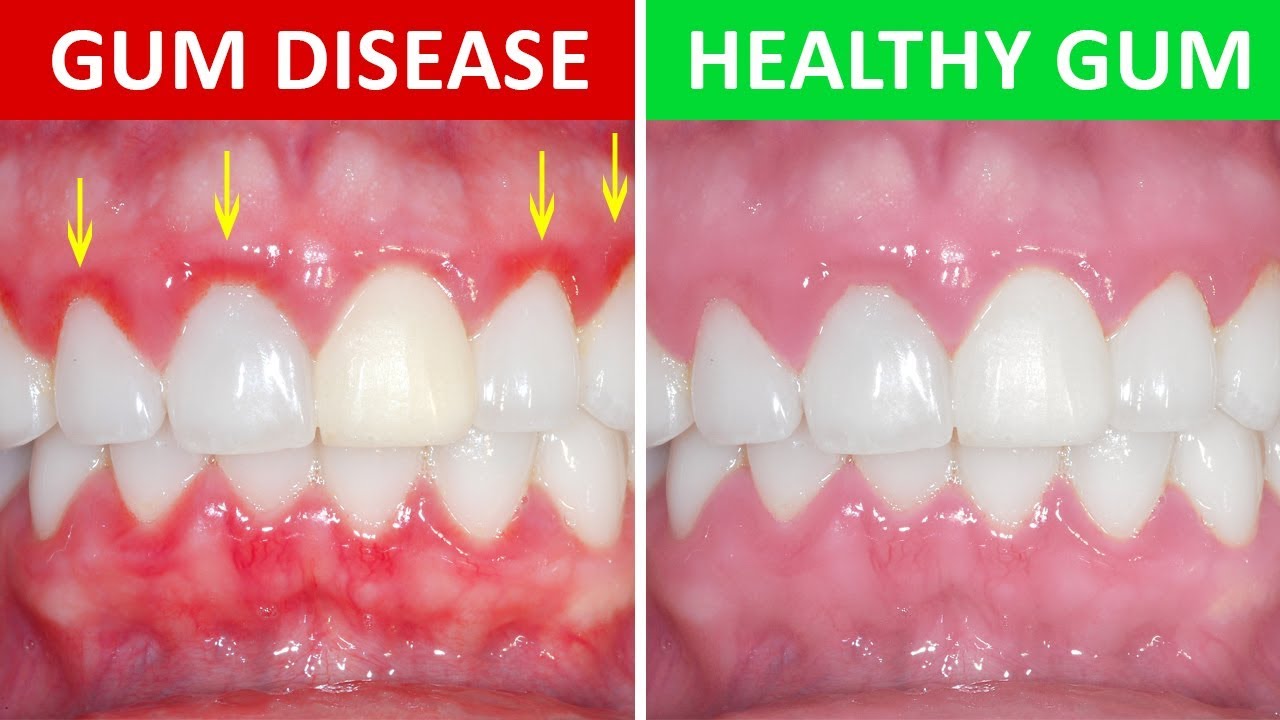
On the left side, someone's gums are shown, red and inflamed. On the right, the gums are pink and healthy.
Gingivitis is characterized by red, inflamed gums, as shown on the left. Image courtesy of The Family Dental Center.

Gingivitis

The initial stage of gum disease is known as gingivitis, which is the inflammation of the gums. Some symptoms of gingivitis include:

  • Bleeding gums while brushing or flossing
  • Redness and/or swelling of the gums

Gingivitis can occur in chronic and acute forms:

  • Acute Gingivitis → associated with infections or trauma
  • Chronic Gingivitis → associated with plaque buildup on the teeth and gums

Since gingivitis is the first stage of gum disease, only the gums are affected — not the bone or connective tissue. This means it can often be reversed simply by practicing good oral hygiene. 

Periodontitis

The second stage of gum disease is periodontitis, which means “inflammation around the tooth.” Unlike gingivitis, in this stage, the bone and tissue are now damaged beyond repair. 

Symptoms of periodontitis are:

  • Sensitive teeth
  • Loose teeth
  • Painful chewing
  • Receding gums 

Periodontitis is characterized by the formation of pockets between the teeth and gums. While there are treatment options for this second stage of gum disease, the damage that has already been done is irreversible. If untreated, periodontitis can result in tooth loss.

Advanced Periodontitis

This is the final, most advanced stage of gum disease during which the bones and fibers of teeth are being broken down. Symptoms of advanced periodontitis are the same as symptoms of periodontitis. Like mentioned before, this can result in tooth loss, as teeth often shift or loosen. 

If treatment methods prove ineffective, dental specialists might be forced to remove the affected teeth. Should that be the case, you can read about your options for missing teeth.

Treatment Options

The main goal of any of the treatment options listed below is to control the infection. 

Scaling and Root Planing

This procedure is used to remove plaque buildup and tartar deposits both above and below the gum line. 

Bone and Tissue Grafts

Bone and tissue grafts help regenerate the bone or tissue that were destroyed. A mesh-like material is placed between the bone and the tissue, which helps to reduce further bone loss and gum recession.

Practicing Good Oral Hygiene

Like mentioned a few times throughout this article, practicing good oral hygiene is a way to prevent and treat gum disease. This means brushing your teeth two times per day, flossing once per day, and visiting your dentist twice a year for regular check-ups. Even if you think your gums look perfectly healthy, you should continue to brush, floss, and visit your dentist regularly. 

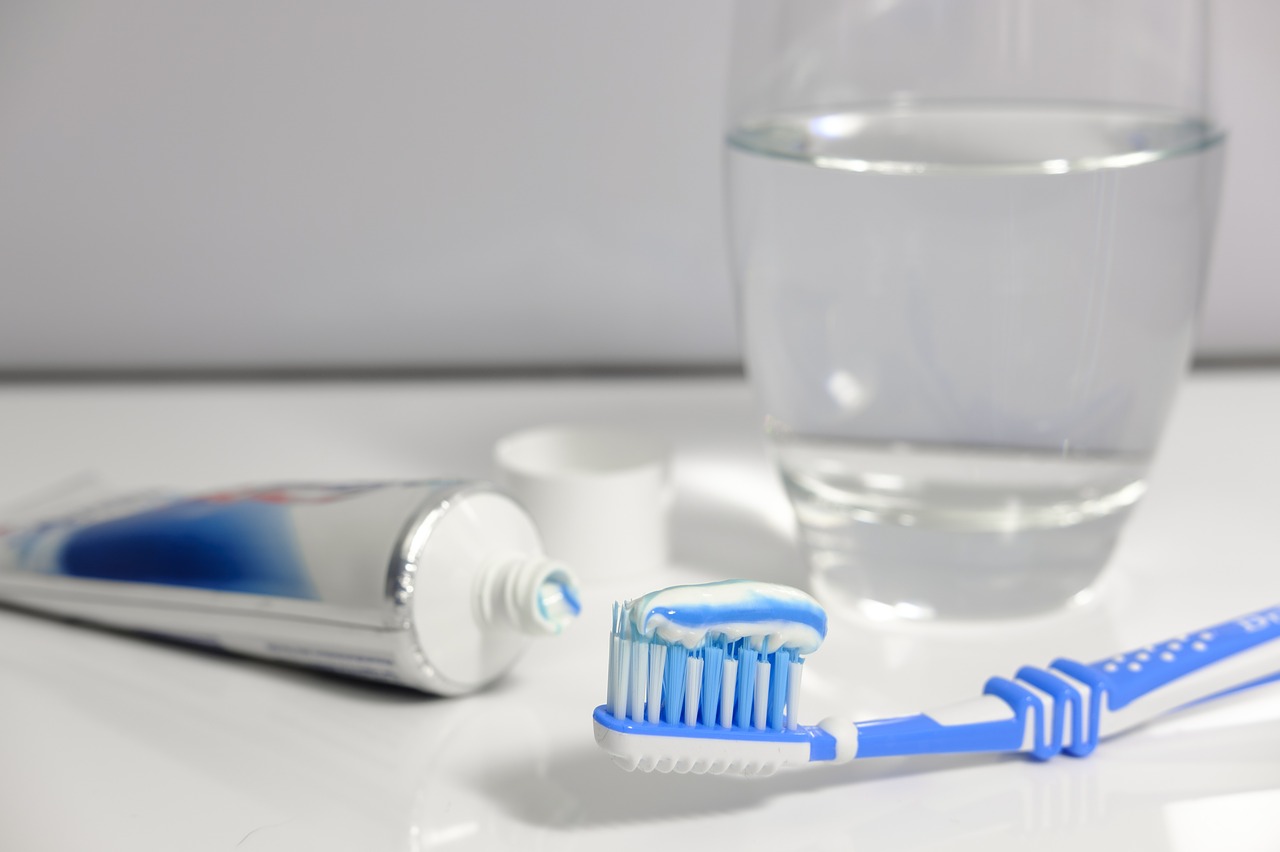
A toothbrush with toothpaste, a tube of toothpaste, and a glass of water sit on a countertop.
Maintaining a proper dental hygiene routine is crucial to preventing gum disease.  

If you think you’re experiencing symptoms of gum disease, whatever stage it may be, the staff at Elizabeth Wakim DDS can help you. Proper dental care is their specialty, and they want to make sure your gums are as happy and healthy as can be.

How To Prepare For Wisdom Teeth Surgery

If you recently received the news that you need to have your wisdom teeth removed, you might be a little nervous. Just know that you’re not alone — having your wisdom teeth removed is something almost everyone experiences during their life! This article is designed to help you feel less worried about your upcoming surgery, so here’s a preview of what we’ll cover:

  • Why Do We Even Have Wisdom Teeth?
  • Why Do I Need My Wisdom Teeth Removed?
  • To Do: Before the Surgery
  • To Do: the Day of the Surgery

Why Do We Even Have Wisdom Teeth?

Wisdom teeth are the third set of molars that develop between the ages of 17 and 25. Back in the prehistoric era, these teeth helped humans chew foods, like raw meat and plants. Also, losing teeth was a common problem, so this set of molars was a way to make sure humans still had enough teeth. However, now that humans have evolved, we don’t have a need for these teeth.

While the majority of the population have (or have had) their wisdom teeth, there are some people — about 35% — who do not. Those lucky people will never have to worry about getting their wisdom teeth removed, but the rest of us do.

Why Do I Need My Wisdom Teeth Removed?

Often, people who need their wisdom teeth removed don’t have any symptoms, so you may be wondering why you even need surgery. The short answer is that if they are not removed, they can cause problems, such as:

  • Pain
  • Swelling
  • Infection
  • Damage
  • Crowding

Plus, if your wisdom teeth are impacted, which means they are not able to break through the gums, they can damage other teeth.

This x-ray shows four impacted wisdom teeth, one at each corner of the mouth. They are circled in orange to highlight them.
Circled in orange in this x-ray are someone’s four impacted wisdom teeth. Image courtesy of Westside Orthodontics.

Complications down the road are also a risk of not having your wisdom teeth removed. If you don’t have your wisdom teeth removed before the roots develop fully, it’s much harder to extract them than only the molars. Having your wisdom teeth removed at a later age makes for a longer recovery. Also, if they don’t erupt and are not removed, there is a 25% chance that the lining around the tooth will become cancerous.

To Do: Before the Surgery

Ask Questions

You might have a lot of questions, and don’t hesitate to ask them! Chances are your dentist has already been asked these same questions by previous patients.

Three little figures -- one blue, one yellow, and one red -- each hold a wooden letter, F, A, and Q, respectively.
Asking questions about the surgery can help ease your nerves.

Here are some common questions people like to ask:

  • How many of my wisdom teeth are being removed?
  • How long will the surgery take?
  • Will the surgery hurt?
  • What should I do after my wisdom teeth are removed?

Prepare a Recovery Area

Before you leave for your surgery, do yourself a favor and set up a recovery area.

For example, put a few blankets and pillows on the couch in your living room. Move a table close by that has tissues, water, and anything else you think you may need. Gathering chargers for electronic devices and remotes for the television might also be a good idea. This way, when you come home, you can just sit down and relax.

Make or Buy Food

When you eventually feel hungry after your surgery, you’re not going to have the energy to cook. So, making food in advance is a way that you can combat this.

Foods like soup, ice cream, and applesauce are great options. If you opt for soup, though, know that you have to eat it at a lukewarm temperature.

Two bowls of tomato soup, garnished with parsley, are shown here.
You’ll thank yourself later if you make some soup a day or two before your surgery; that way, you can just heat it up and eat it.

To Do: the Day of the Surgery

When the day of your surgery arrives, there are a couple of things you want to do to ensure your surgery goes as smoothly as possible.

Brush Before You Go

Before you leave your house, give your teeth a good brushing and flossing. Performing those activities are difficult after surgery, so doing them before the procedure is a good idea.

Don’t Go Alone

Make sure a family member or a friend is able to drive you down to the surgical center. You will be given anesthesia before the surgery so you aren’t aware of anything, and once you wake up, the effects of the anesthesia will still be with you. Driving in that condition is unsafe to you and others, so having someone drive you means everyone gets home safe.


By now, you should have a good idea of what to do in order to prepare for wisdom teeth surgery. If you want to know about what happens after the surgery, you can read about it here. If you have any other questions about how you can prepare for wisdom teeth surgery, contact the oral and maxillofacial surgery specialists at Elizabeth Wakim DDS.

How To Recover From Having Your Wisdom Teeth Removed

If you recently had your wisdom teeth removed, you might be wondering what to do now. Lucky for you, we’ve put together a guide of what you can expect and what steps you can take to ensure a speedy recovery. Here’s a preview of what we’ll cover in this article:

  • How Long Does the Recovery Process Take?
  • Side Effects and How to Combat Them
  • What Can You Eat?
  • A Little Bit of R&R

How Long Does the Recovery Process Take?

In short, recovering from wisdom teeth surgery takes roughly two weeks.

Dentists instruct patients to begin proper care immediately after the surgery. This means making sure they use gauze to stop bleeding, take pain medications when necessary, and do not eat or drink anything that might cause short- or long-term problems.

Side Effects and How to Combat Them

As with any surgery, there will be side effects to having your wisdom teeth removed. Listed and explained below are the most common ones that people experience.

Bleeding

A side effect all people experience post-wisdom teeth surgery is bleeding. While bleeding might be panic-inducing, it is completely normal in this scenario.

To combat this, place the gauze your dentist gave you over the area and bite down. Do this for 30 minutes, and make sure to not chew on the gauze, as that can cause more bleeding. If the gauze does not help, swap it out with a wet tea bag; the tannic acid from the tea aids in the formation of clots.

Clots should form within 24 hours; if bleeding persists, contact your dentist.

Swelling and Bruising

When people talk about having “chipmunk cheeks” after wisdom teeth surgery, it is because they are experiencing swelling. Usually, swelling reaches its peak two to three days after the surgery.

However, placing an ice pack on your face for 20 minutes, leaving it off for 20 minutes, and repeating can help lessen the possibility of swelling. The most crucial time to ice your jaw is 24 to 36 hours after the surgery.

A woman holds a blue ice pack to the left side of her face to help reduce pain and swelling.
Icing your jaw like so can help reduce swelling and alleviate pain. Image courtesy of Redmond Signature Dentistry.

With swelling often comes bruising. Using ice packs can help alleviate the pain caused by bruising and can also make it go away more quickly. By two weeks after the surgery, bruising should be completely gone.

Nausea

This side effect is often a result of the anesthesia used during or the pain medications taken following surgery. If you experience nausea and/or vomiting, wait an hour before taking anything. After, take small sips of ginger ale; if you keep that down, eat some solid but soft foods. Then, you’re good to take the medication again.

General Discomfort

While pain depends on the person, each person who has wisdom teeth surgery will at least experience a general discomfort. This can include stiffness, soreness, pain when swallowing, and other similar effects.

Taking prescribed pain medications, like Vicodin or Percocet, or over-the-counter medications, like Advil or Tylenol, can help alleviate these symptoms of general discomfort. If you take these, do not drink alcoholic beverages or operate machinery; in fact, do not drink alcohol post-surgery, anyways. Avoiding tobacco products during the recovery process is also crucial, as the latter can increase the risk of dry sockets.

What Can You Eat?

After having one to four teeth removed from your mouth, it’s unlikely you’ll want to eat a large meal. When you do feel hungry during the first 24 hours, though, stick to only liquids — soups, milkshakes, smoothies, etc. However, do not use a straw, as the use of one can create dry sockets, which are extremely painful.

A man digs his spoon into a bowl of chocolate ice cream.
Soft, cold foods like ice cream are great to eat during the first 24 hours, as they soothe the mouth and don’t require a lot of chewing.

For the next four to five days, eat only soft foods that don’t require you to chew a great deal, like applesauce, pudding, and pasta. Make sure to eat high-calorie, high-protein foods, as they are important for regaining strength.

A Little Bit of R&R

The main thing you need to do post-surgery is rest. Sleep and rest are important when people are recovering from illnesses or injuries, so it only makes sense that you need both to properly recover from oral surgery.

A woman rests with her head elevated on several pillows.
Elevating your head with pillows and getting some sleep are ways to ensure a quick recovery.

In addition, continue to practice proper oral hygiene, as this is especially important after having wisdom teeth removed. You definitely want to keep brushing and flossing regularly, however, you need to be gentle the first few weeks after the surgery. Do not floss nor brush roughly near the surgical areas, as this could cause bleeding and irritation.

Taking proper care of your mouth after you had your wisdom teeth removed is essential to the recovery process. If you have any questions or concerns, the staff at Elizabeth Wakim DDS who specialize in oral and maxillofacial surgery are here to help.

Header image courtesy of Pickett Family Dental.

Everything You Need To Know About Dental Crowns And Dental Bridges

Dental crowns and dental bridges are two ways that missing or damaged teeth can be repaired. While they are similar in some ways, there are some differences, and a lot of people don’t know the differences between the two are. That’s perfectly okay! That’s why we’re here. Keep reading to learn more about:

  • What Is a Dental Crown?
  • What Is a Dental Bridge?
  • The Process of Getting a Dental Crown/Dental Bridge
  • How to Care for Your Crowns and Bridges

What Is a Dental Crown?

Sometimes referred to as a “cap,” a dental crown completely covers (or caps) and restores a damaged tooth.

You might be wondering when exactly you might need a dental crown. Here are a few scenarios when a patient might need to get a crown:

  • Reconstruction of a tooth/teeth after a root canal
  • A tooth is broken and cannot receive any other solutions, like an overlay
  • Most of the middle of the tooth is missing
  • A tooth is fractured and would break if something was not done
  • A tooth is missing a cusp
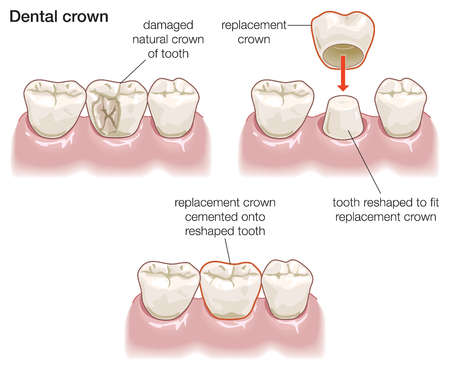
This image shows the process of getting a dental crown. First, the dentist removes the damaged part of the tooth. Then, the crown is placed over the reshaped tooth. Finally, the replacement crown is cemented onto the tooth.
This diagram helps explain the three-step process of getting a dental crown. Image courtesy of Beachmere Dental.

There are many benefits to getting a dental crown. For one, a dental crown strengthens the damaged tooth/teeth while simultaneously improving its appearance and alignment. When placed over a dental implant, a crown can even be made to look like a real tooth.

Dental crowns are not like dentures; they are cemented perfectly onto your tooth, and only a dentist can remove one if the case would arise.

Crowns can be made from a variety of materials. While gold is the strongest, some people might not like the color and appearance. However, there is also ceramic and zirconia, which are both offered at Wakim, DDS.

What Is a Dental Bridge?

A dental bridge is a way to address missing teeth. Appropriately named, bridges “bridge” the gap between one tooth and another, which was created when a tooth fell out or was extracted.

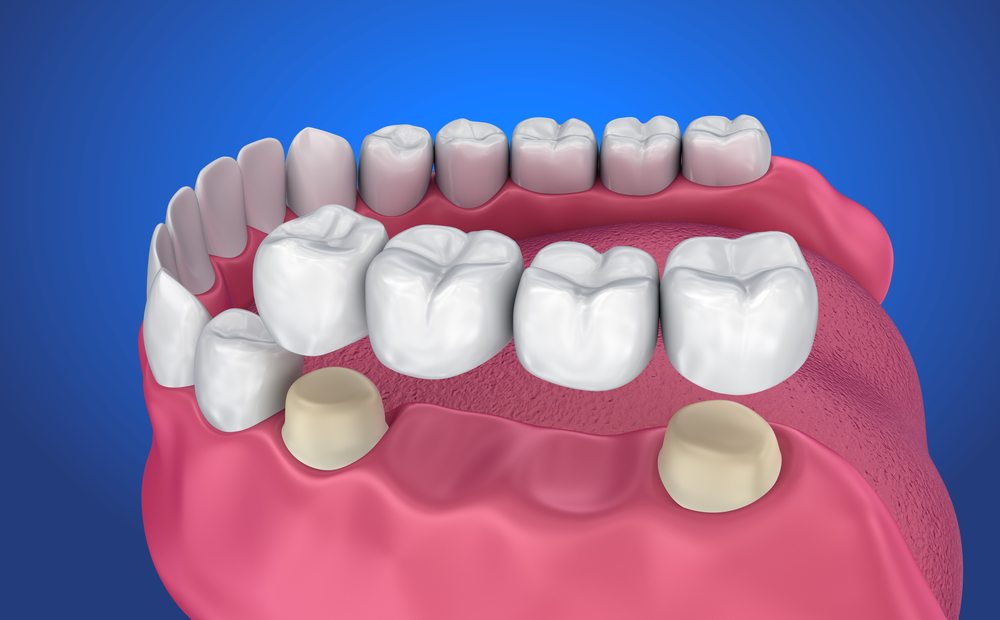
You may be wondering, how do bridges work? Well, a bridge is attached to the teeth — whether they are natural or dental implants — on either side of the gap. Think of a bridge as three (or more, depending on the case) crowns that are connected. The replacement tooth, which fills the gap, is known as a pontic.

There are two missing teeth that will be replaced by pontics, the alternate teeth. They are attached via the two teeth on either side of the gaps.
To replace two gaps between teeth in this example, there are two pontics that are connected by attachments. Image courtesy of Rocklin Family Dental.

Like dental crowns, dental bridges are made from a variety of materials. Ceramic and zirconia are available for bridges as well as crowns, and we make all of our bridges in office. If a longer bridge is needed, it is manufactured in the lab and is available to be placed at a later date.

The Process of Getting a Dental Crown/Dental Bridge

Getting a crown or bridge placed usually requires two visits.

During the first visit, the dentist will actually remove a small portion of the tooth — the damaged or cracked areas — so that the crown or bridge will fit over it. When placing a dental bridge, the teeth on both sides of the gap will have to be prepped as such.

After that, the dentist takes an impression of the tooth/teeth. Between the first and second visits, temporary dental cement will be placed on the teeth in order to cover and protect them.

During the second visit, the dentist places the crown or bridge on the teeth. When placing crowns and fixed bridges, dentists will use a bonding adhesive; when placing removable bridges, dentists will use clips.

How to Care for Your Dental Crown/Dental Bridge

Crowns are permanently cemented onto your tooth, so you can chew, brush, and floss like normal once it’s completed!

When you brush a bridge, do it as if you didn’t even have one. Flossing, however, is a little different when you have a bridge. Using a floss threader is recommended, as it gets between the teeth and under the pontic, the replacement tooth.

Flossing when you have a dental bridge is a bit different than flossing without one. Make sure you floss properly using a floss threader to avoid any complications.
This diagram explains how to floss when you have a dental bridge. Image courtesy of Dear Doctor, Inc.

While crowns and bridges both can last a lifetime, sometimes they become loose or can even fall out. Brushing and flossing daily, visiting your dentist regularly, and avoiding hard foods can help ensure that you get the most out of your crown or bridge.

If you’ve been thinking about replacing your missing or damaged teeth, our crown and bridge experts at Wakim, DDS can certainly help you. Contact us or stop in today to see how we can help you regain your happy and healthy smile.


For questions, partnerships, or to have your story covered on the Elizabeth Wakim, DDS dental health blog, click here.

5 Organic Mouthwash Options You Need to Try

Using mouthwash is an important part of dental hygiene that protects against bad breath, reduces the risk of cavities, whitens teeth, and fights gum disease. Some people avoid using mouthwash because of the burn and sting it leaves in their mouths, which means they are missing out on the benefits mouthwash has. Luckily, there are plenty of organic mouthwash options available that leave you feeling fresh and clean without the irritating side-effects. In this article, we’ll cover:

  • Organic Mouthwash Brands to Try
  • How to Make Your Own Mouthwash

Organic Mouthwash Brands to Try

If a product is labeled as “organic,” that means it was manufactured without the use of harmful chemicals and does not contain artificial flavors, colors, preservatives, or other additives. Below is a list of organic mouthwash products that we think you’ll like.

Schmidt’s Wondermint Mouthwash

Plant- and Mineral-Based Freshness

Schmidt's Wondermint Mouthwash, which comes in a white and blue bottle, freshens breath for a brilliant smile.
Schmidt’s Wondermint mouthwash, made with a plant-based formula, soothes your mouth and leaves it feeling fresh. Image courtesy of Schmidt’s.

In 2010, Jamie Schmidt of Portland, Oregon developed a formula for a plant-based, natural deodorant. Five years later, she partnered with Michael Cammarata, an entrepreneur. Together, the two began to create more natural products, like toothpaste and mouthwash that use plant- and mineral-based formulas. Aside from Wondermint, their mouthwash comes in other flavors, like Tea Tree & Ginger and Coconut & Aloe.  

All of their products are:

  • Free of aluminum, parabens, artificial flavors, and more
  • Vegan and cruelty-free; they never tested on animals
  • Good for you and the environment
  • Affordable and available for all

Tom’s of Maine’s Wicked Fresh! Mouthwash

Alcohol-free and Sea-Salt Infused

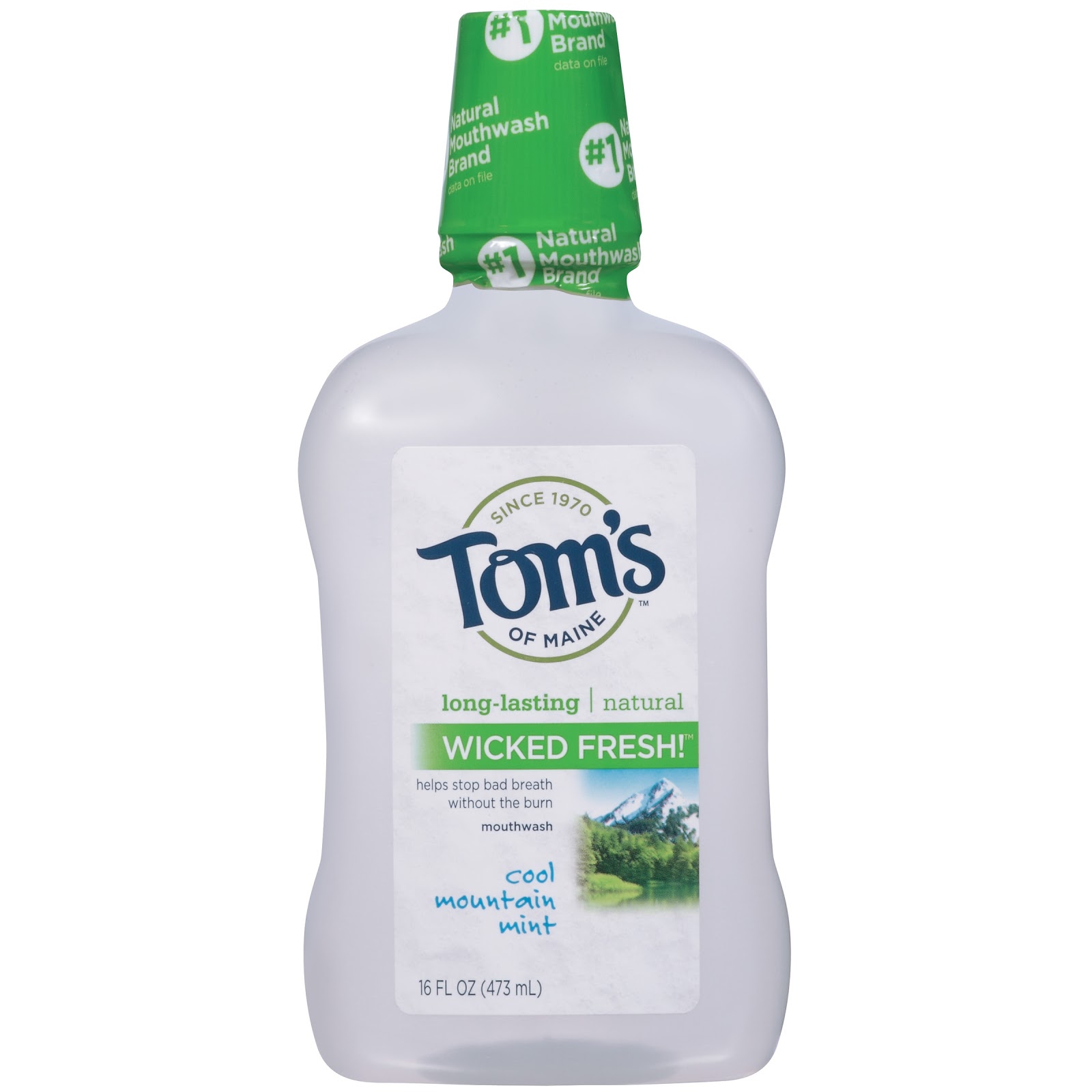
Tom's of Maine has been around since 1970 and prides itself on being the #1 natural mouthwash brand.
Tom’s of Main combines natural ingredients to make personal care products that are good for you and the planet. Image courtesy of Walmart.

Tom’s of Maine was started by Tom and Kate Chappell in 1968. With naturally sourced and derived ingredients, which are all listed on their website, the company is devoted to creating personal care products that follow sustainable business practices.

None of their mouthwash contains animal ingredients nor artificial additives, is not tested on animals, and does not have ethyl alcohol. Other flavors include Fresh Mint, Peppermint Wave, and Sea Salt-Infused Refreshing Mint. There are also flavors for children, like Silly Strawberry Anti-Cavity rinse, which is alcohol- and dye-free.

Tom’s also keep their product packaging out of landfills through their partnership with Terracycle, a company that converts mouthwash bottles and caps, floss containers, and more into other products. They also donate 10% of their profits to nonprofit organizations.

Hello Activated Charcoal Extra Freshening Mouthwash

Take a Swish on the Wild Side

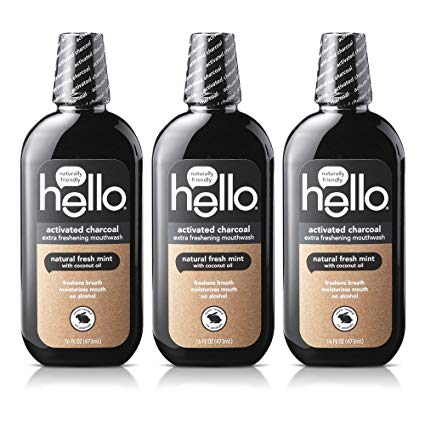
Hello Activated Charcoal mouthwash is all black and uses the activated charcoal to freshen breath.
Don’t let the black color of this mouthwash deter you from using it; fluoride-free and charcoal-infused, Hello mouthwash is a great organic mouthwash. Image courtesy of Amazon.

Hello products are vegan, made in the United States with globally-sourced ingredients, and free from artificial dyes, additives, and gluten. Founder Craig Dubinsky, who is available to talk with consumers, emphasizes products with natural formulas that clean your teeth and don’t leave your mouth stinging. Plus, their products are environmentally friendly, with packages are made from recycled paper and use soy-based ink.

Blisque Organic Mouthwash

USDA-Certified Organic and Alcohol-Free Mouthwash

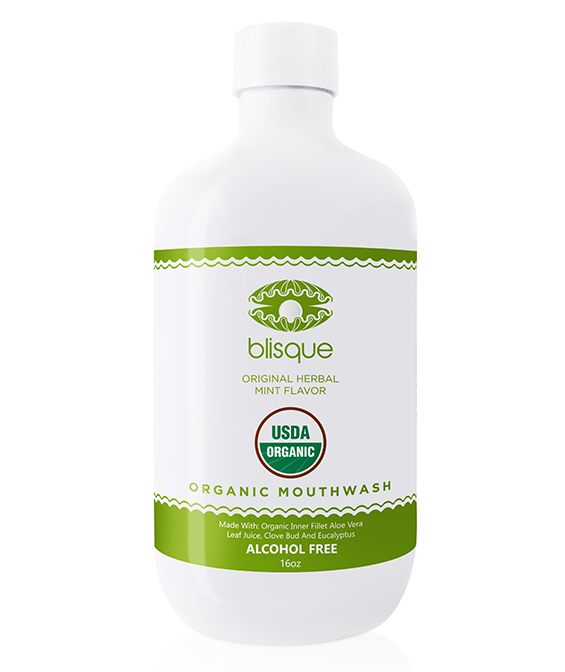
Blisque mouthwash comes in various flavors, one being Original Herbal Mint; it's also USDA Organic!
Blisque mouthwash is a quality choice for people with sensitive teeth. Image courtesy of Blisque.

Blisque, founded by Emil I., is a company that strives to create effective and earth-friendly oral care products. None of their ingredients are made synthetically, harmful to the environment, or processed with chemicals or additives. Shake well before use, and once you’re done, you’ll feel refreshed and clean.

Georganics Oil Pulling Mouthwash

Natural Mouthwash in Eco-Friendly Packaging

To use Georganics Oil Pulling mouthwash, swish 1-2 teaspoons around in your mouth for 5-20 minutes. Make sure you don't rinse your mouth out after you spit.
Pour 1-2 teaspoons of Georganics English Peppermint mouthwash onto a spoon, then swish it around your mouth for 5-20 minutes. Image courtesy of Georganics.

With natural ingredients and no synthetics, Georganics produces organic oil pulling mouthwash that attacks bacteria that leads to gum disease. The company’s packaging is sustainable, with zero-waste and eco-friendly packaging. They also have a “zero to landfill” scheme that allows people to send back old Georganics products that you cannot recycle at home. This allows for less waste and a more conscientious approach.

How to Make Your Own Mouthwash

Unsure if you want to try one of the products listed above? You can always make your own!  

This recipe from Oh, the Things We’ll Make is a free, cheap, and quick way to make your own mouthwash using household products. You’ll need:

  • 1 tsp. salt
  • 1 tsp. baking soda
  • 1 tsp. xylitol
  • 8 drops of peppermint essential oil (or a different oil), optional
  • 20 drops of mineral drops
  • 1 cup of distilled water

All you need to do is add the ingredients to a bottle and mix. Other than that, just shake well before each use.

Purchasing one of the above brands or making your own mouthwash is a great way to use alcohol-free, organic mouthwash. If you’re unsure which type is best for you, contact us and schedule an appointment. We’d be happy to answer any questions you have.

For questions, partnerships, or to have your story covered on the Elizabeth Wakim, DDS dental health blog, click here.

Featured image courtesy of AARP.

How to Have Fun with Flossing

While dentists all over the world encourage their patients to floss regularly, not everyone adheres to their advice. When asked why they don’t floss, people give reasons for like it takes too much time or it makes their gums bleed, but what if there was a way to make flossing enjoyable? Well, there is! In fact, there are multiple ways. Start reading to learn more about:

  • The Importance of Flossing
  • Products that Make Flossing More Fun
  • Floss for the Eco-Conscious

The Importance of Flossing

Each time you visit a dentist’s office, the staff always stresses the importance of flossing, and for good reason. There are quite a few benefits that come from flossing. This simple act that takes only a few minutes per day helps protect against bad breath, gingivitis, plaque build-up, and other gum diseases. Combined with brushing your teeth and other dental practices, this can lead to a whiter smile and healthier teeth.

Products that Make Flossing Fun

A common complaint that people have about flossing is that it takes too much time. If flossing were more enjoyable, though, people might be more inclined to take the extra few minutes out of their day.

Cocofloss

Soothing Floss with Coconut Oil

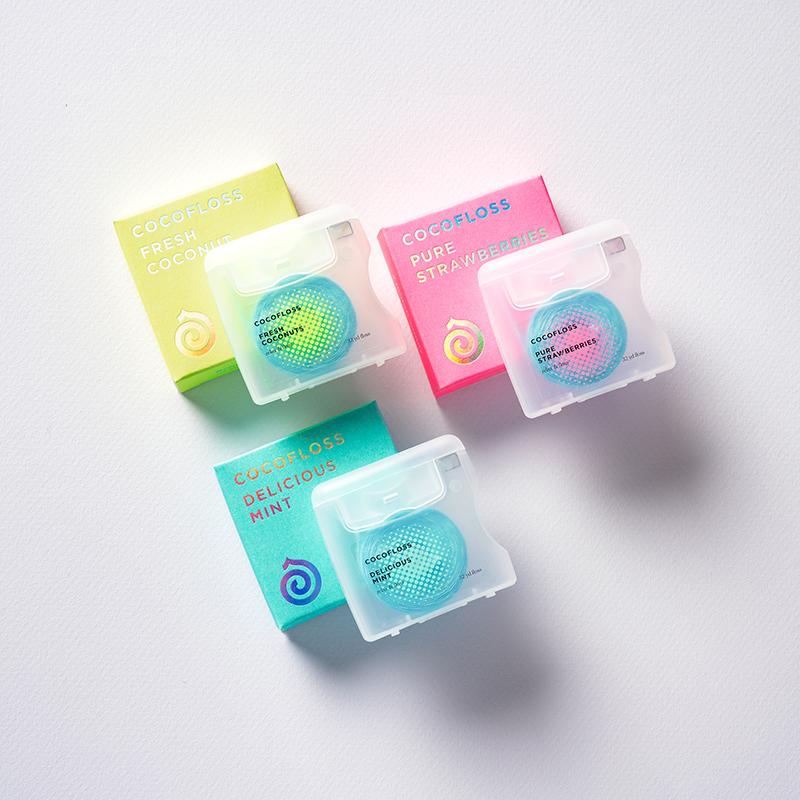
A picture of Fresh Coconut, Pure Strawberries, and Delicious Mint Cocofloss.

Cocofloss, which is infused with coconut oil, is gentle on gums and makes flossing fun. Image courtesy of Cocofloss.

Cocofloss, invented by Chrystle and Catherine Cu, is a brand of floss that is gentle and soothing on the gums, thanks to the inclusion of coconut oil. It comes in fun flavors, too, like… mint, coconut, strawberry, and orange. There are even limited-time flavors, like vanilla bean, pure peppermint, and passion fruit! The fibers themselves are blue, making the food particles and plaque easily visible so people can see instant results. The Cu sisters emphasize comfort and sustainability in all of their products.

Gummy Floss

The World’s First Silicone Rubber Dental Floss

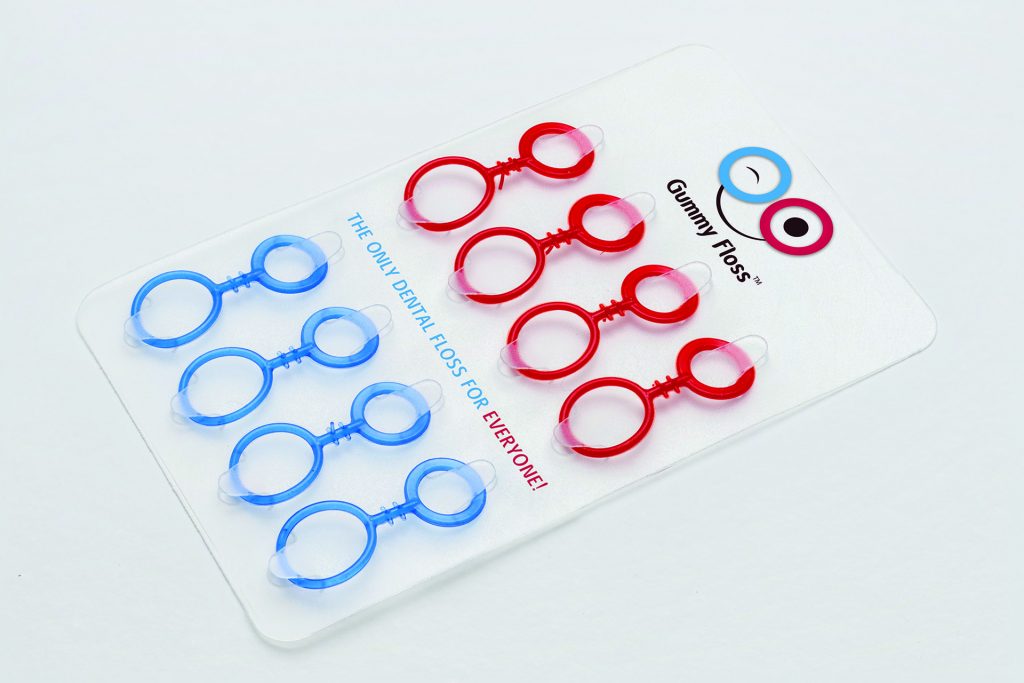
This shows a packet of GummyFloss. There are five red and five blue flossers.
GummyFloss is flexible and mint-flavored and comes with thumb grips to make flossing easier. Image courtesy of GummyFloss.

Gummy Floss is the world’s first silicone rubber — as opposed to nylon — floss. Brightly colored, infused with yummy flavors, and designed with thumb grips, this brand of floss is a good option to introduce kids to flossing. However, Gummy Floss — like all floss in general — is for all ages!

GumChucks

The One-of-a-Kind Way to Floss

GumChucks, a play on the word “nunchucks,” is a new way to floss. Image courtesy of Growing Smiles.

Another product for both children and adults is GumChucks. This device consists of two handles that are connected by a piece of floss. On the packages of the products aimed at kids, there is a superhero named “Plaque Man” and a small bio about him, including skills and some of his favorite things. On their website, they have flossing charts, a certificate, and themed coloring pages to encourage kids to floss. GumChucks are also braces-friendly; the product named “ORTHOgami” allows those with braces to floss in less than two minutes.

Floss for the Eco-Conscious

Regular floss is made of waxed nylon, which is not recyclable nor decomposable. However, there are a few environment-friendly floss brands out there for those who want to protect their teeth and the environment.

WooBamboo!

Environmentally-Friendly Floss and Packaging

This shows four packages of WooBamboo floss. There is a panda wearing sunglasses at the top, and there is a description of the floss above the role of floss itself.
WooBamboo! makes organic floss whose packaging is made of post-consumer waste. Image courtesy of WooBamboo!

WooBamboo! sells organic floss made of silk and coated with natural wax. The entirety of the product is environment-friendly; the packaging is post-consumer waste-based, plant-based, and recyclable. The floss itself is even biodegradable, unlike traditional floss.

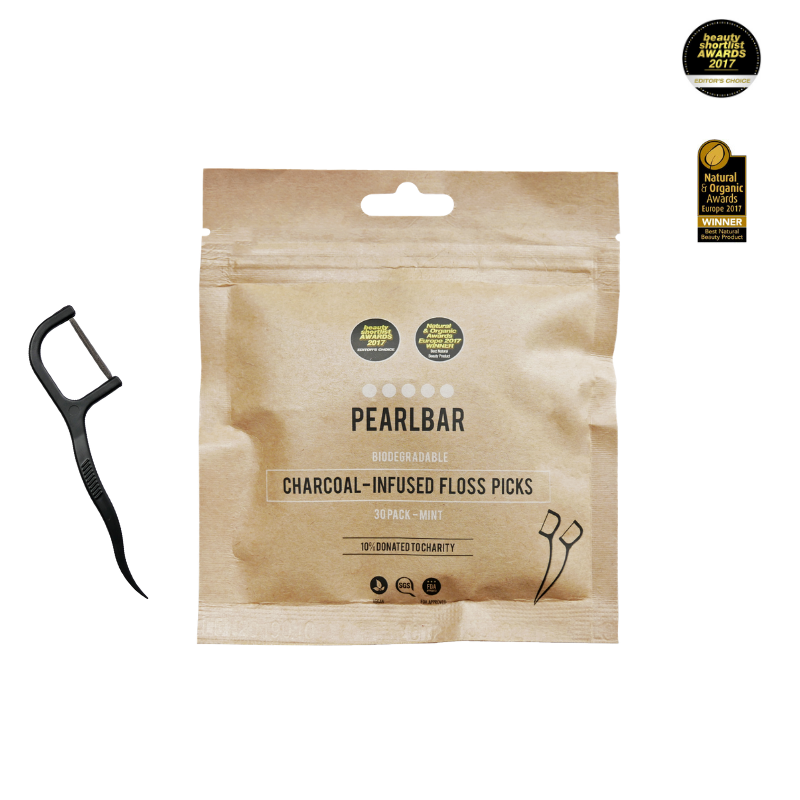
PearlBar Floss Picks

Floss Picks Infused with Charcoal

This is an image of a small, brown package of PearlBar charcoal-infused floss picks. A singular floss pick is also shown to the left side of the package.
These charcoal-infused floss picks are great for your teeth and the environment. Image courtesy of PearlBar.

Another option is charcoal-infused floss picks from PearlBar. Activated charcoal has been infused into these picks, which are cruelty-free and vegan. In addition, both the picks and package are biodegradable, taking only 6 months to decompose. Easily transportable, breath freshening, and environmentally friendly, these floss picks are a win-win-win.

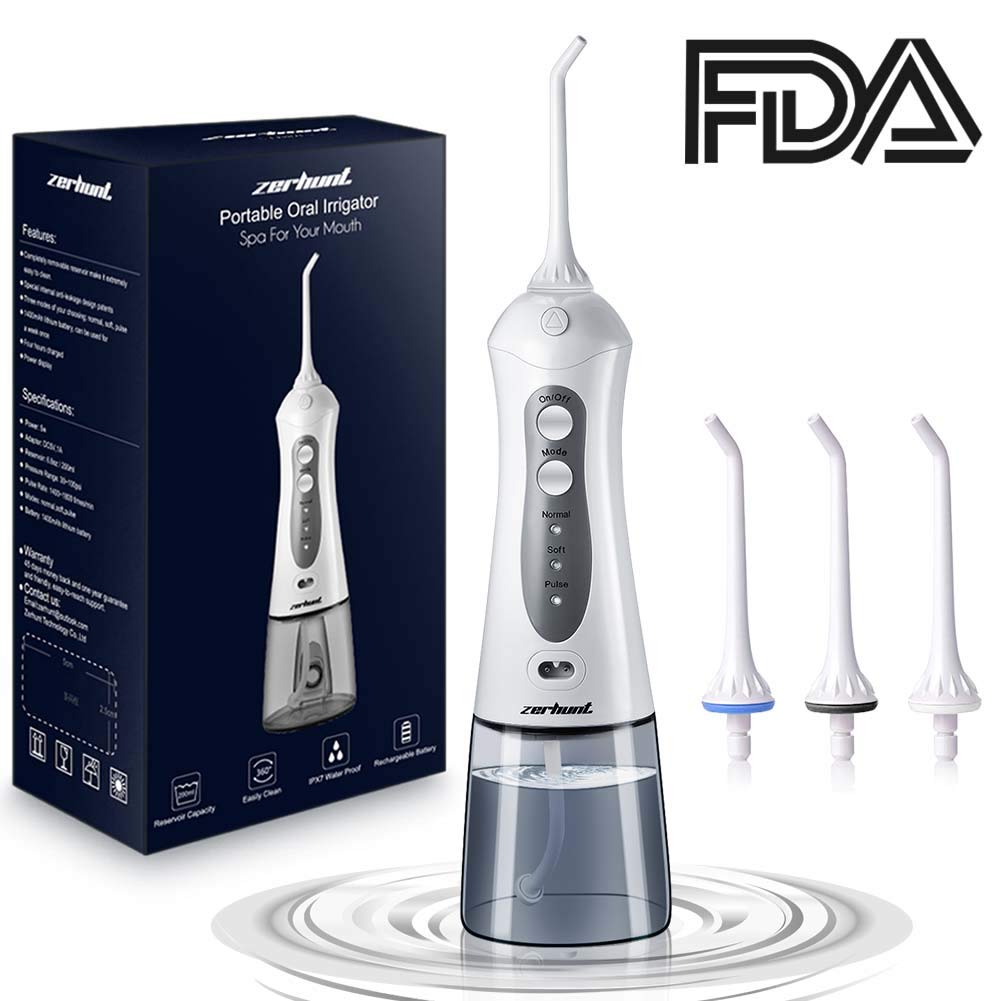
Zerhunt Cordless Water Flosser

Reduce Floss Waste with Water Flossers

This shows a box of Zerhart's water flosser. The flosser itself is bigger and the highlight of the image. There are three interchangeable tips shown, too.
Water flossers are also an environmentally friendly alternative to flossing. Image courtesy of Amazon.

This handheld device that sprays water between your teeth, removing food particles and freshening your breath. For those who have difficulty flossing because of braces or other reasons, water flossers might be the solution. This specific water flosser, the Zerhunt Cordless Water Flosser, comes with various colored tips, making them ideal for families who all want to use a water flosser.

As you can see, there are plenty of fun, new products that can make flossing more enjoyable. If you’re someone who doesn’t floss as much as you should, buying one of these products might make you more inclined to do so. That way, the next time you’re at your regular dental check-up and your dentist asks if you floss regularly, you can answer with pride that yes, you do.For questions, partnerships, or to have your story covered on the Elizabeth Wakim, DDS dental health blog, click here.