The Importance of a Good Gaming Logo

Whether you’re a large, well-known company, a small business, or even a gamer, you need a logo. This symbol represents who you are as a business, or a gamer, so you want to make sure it’s professional, unique, and memorable. 

If you’re a gamer who doesn’t have a logo, maybe you just don’t know where to start, what your logo should contain, or how to get one made. In this article, we’ll tell you all about logos and give you some examples of custom-made ones. Keep reading to find out more about: 

  • Why Gamers Need a Logo
  • The Components of a Solid Logo
  • Examples of Boosted-Made Logos

WHY GAMERS NEED A LOGO

If someone asked you to name 10 logos of popular companies, you could do so easily. They exist everywhere and are present in our everyday lives, whether we realize it or not. 

While your average Joe might not be able to rattle off 10 logos of popular gamers, there are certainly people invested in the esports world who can. That is why you, as a gamer, need a logo. 

Considering your whole life as a gamer is based online, you’ll want a logo that your followers will know and recognize. Your logo is what you will be associated with, so you want it to be well-made and unique. 

THE COMPONENTS OF A SOLID LOGO

You know you need a logo, but maybe you don’t know what a logo needs to be good. Don’t worry — that’s where we come in. 

VISUAL AND TEXT

A combination of a word, or multiple words, and a visual is key to a good logo. Some examples of companies whose logos feature both text and visual are Nike and Target. 
Nike’s famous black swoosh with bold, thick, slanted text is a sleek and modern logo. Image courtesy of Precise Continental.

However, Nike and Target are two companies whose logos have become so popular that people only need to see the visual aspect of the logo to recognize the company. People automatically associate Nike with the black swoosh and Target with the red and white bullseye. The companies’ names can be eliminated completely from the logo, leaving only the visual.

FONT

Typography is important to take into consideration when designing a logo. Think about the messages sent by a brand when it has a slim, cursive font versus one that has a blocky, messy font. The former conveys elegance, the latter energy, or even carelessness. You might not realize it, but font impacts what people think when they see your logo.

COLOR

Did you know that a lot of logos contain primary colors, i.e. red, blue, and yellow? Look at Coca-Cola, with the soft drink’s name written in red script, or McDonald’s with its famous golden arches.

Color psychology focuses on how different colors convey different messages. For example, the color blue is often associated with compassion, tranquility, and flexibility. Red, on the other hand, often makes people feel passionate, excited, or even angry. 

When deciding what colors you want to use in your logo, do a little research beforehand to make sure your logo conveys the message you want it to.

EXAMPLES OF BOOSTED-MADE LOGOS

Boosted is a platform and service that exists exclusively for gamers. They help gamers make money, help build a brand, and, most importantly in this scenario, create esports logos. Listed below are a few custom esports logos Boosted has made for gamers.

MELIPASTEL

Melissa, better known as Melipastel, is a 24-year-old Portuguese gamer from New England. She started streaming in October 2014, which means she’s coming up on her 5 year stream anniversary. A variety gamer, she streams any games that catch her interest between PC and PS4. 

You can follow her on Twitch — where she has over 178,000 followers — Instagram, and Twitter.

This logo shows a combination of visual and text with a unique, lavender pop of color. Image courtesy of Instagram.

MATTHDGAMER

Liverpool resident Matt Craig is known in the esports world as MattHDgamer. With only 4 videos on Twitch, he still boasts 385,000 followers. A FIFA YouTuber with over 2.3 million subscribers, he posts a new video every day.

You can follow him on TwitchInstagramTwitter, and YouTube.

Because he focuses on FIFA games, Matthdgamer’s avatar wears a soccer jersey in this custom-made logo — his face resembles a soccer ball! Image courtesy of Instagram.

KEIZARON

Keizaron (pronounced KEYS-are-ON) is known as Steven Eisner and is a professional speedrunner who represents Noble. Among his favorite games to play are Pokemon Red and Pokemon Crystal. The game he has speedrun most recently is Pokémon Let’s Go Pikachu/Eevee, taking only 3 hours, 15 minutes, and 59 seconds to complete it.

You can follow his gaming adventures on TwitchInstagramYouTube, and Twitter.

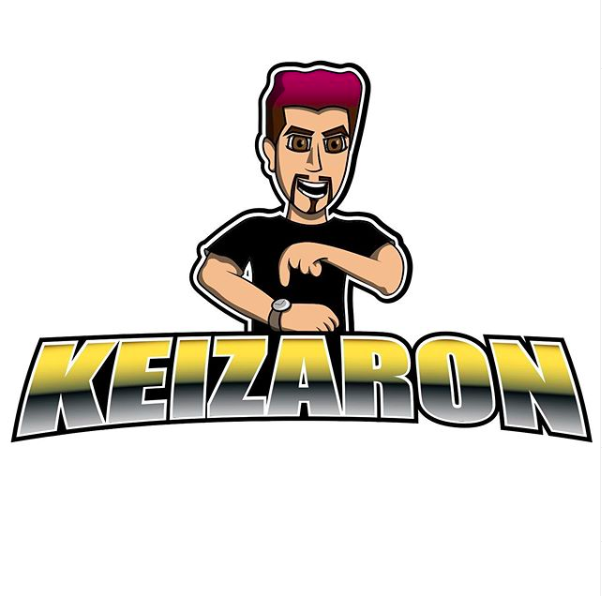
Keizaron’s logo contains both visual and text, as well as a primary color. Image courtesy of Instagram.

TROBSMONKEY

Kansas-based Wargaming streamer Trobsmonkey got into esports in 2009. After registering for the beta for World of Tanks, he fell in love with the game. He started streaming on Twitch a few years later in August 2013. 

You can follow him on TwitchInstagram, and Twitter.

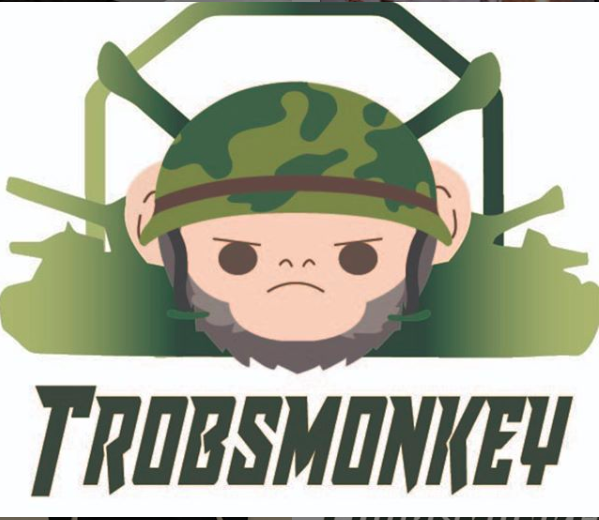
A World of Tanks streamer, Trobsmonkey’s logo features a monkey in a war helmet with army-green silhouetted tanks in the background. Image courtesy of Instagram.


Your logo is a large part of your online identity, so you need to put time and effort into it in order to stand out from the crowd. Before you have a logo created, think hard about the colors and font you want to use, as they can influence what a viewer thinks about you. Use a service like Boosted, and you can rest assured you’ll receive a quality, custom logo.
Branding 101: How to Build Your Online Presence

With over 2.5 billion gamers in the world, how does one gamer stand out from the rest? One word: branding. If you’re a gamer, you need to make your online presence unique and vibrant. Otherwise, you’ll slip back into the crowd and spend your career unnoticed. You may be wondering where you should start and what you need to do, but don’t worry — we have you covered. We’ll go over that and more in this article:

  • First, Figure Yourself Out
  • Don’t Be Anti-Social (Media)
  • Content to Keep Your Followers Content

FIRST, FIGURE YOURSELF OUT

Before you establish yourself online, you need to get all of your ducks in a row. You’ll want to figure out three things: your name, your logo, and your personality.

YOUR NAME

A catchy name is everything. You want a name people will remember, a name that gets you noticed because of its wittiness or the way it rolls off the tongue when you say it. Your name can influence other parts of your brand, like your logo, which we’ll talk about next.

YOUR LOGO

Your brand’s logo is perhaps the most important aspect of your brand. This is how people can identify you in the gaming world.

What do you want your brand’s logo to look like? Do you want it to be a picture of yourself or a logo that looks like it was hand drawn? The latter is more unique and more memorable. With all of the gamers out there, who’s going to remember someone’s face?

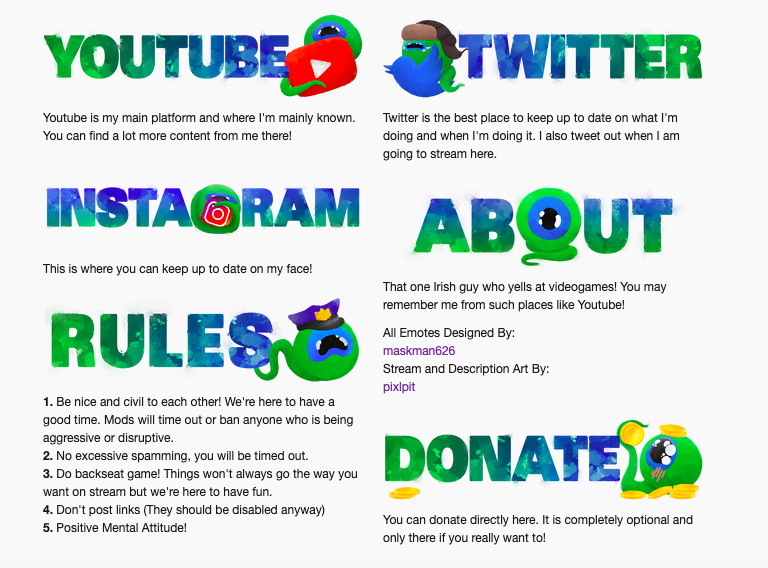
For example, Seán William McLoughlin, known in the esports world as Jacksepticeye, has a memorable logo: a giant green eye with a blue iris. Fans probably remember the slightly creepy, in-your-face logo more than they would a picture of McLoughlin himself.

Jacksepticeye's Twitch profile contains a section where he outlines his social media presence, like Youtube, Instagram, and Twitter. He also has About, Rules, and Donate sections.
Jacksepticeye’s mascot is called Septic Sam, Septiceye Sam, the septic eye, or just Sam. Image courtesy of Twitch.

YOUR PERSONALITY

Something you have that no other gamer has is your personality — so use it to your advantage. Are you someone who loves to crack jokes, or are you someone who’s more serious? Your personality also will depend on what type of game you play, too. 

Whatever your personality type, though, just decide what kind of gamer you want to be. You’ll gain a following regardless.

DON’T BE ANTI-SOCIAL (MEDIA)

Once you have your name, logo, and everything else ready to go, now’s the time to establish yourself on social media. With all of the different platforms available — Facebook, Twitter, Instagram, YouTube, Pinterest, Tumblr, and many more — where do you even start?

Here’s a tip: you probably can’t handle them all right off the bat. You probably want to choose and master one or two platforms before moving to another. Otherwise, you’ll spread yourself too thin, and your content won’t be as consistent as it should be.

That being said, the two most popular social media platforms for gamers — aside from Twitch — are Twitter and YouTube. 

TWITCH

Your Twitch page is the most important social media platform. You want it to look professional, but not cookie-cutter — your personality should be embodied on your Twitch page.

Social media buttons are essential to have on your Twitch page. That way, if a new fan comes to your page, they can easily access and follow your other social media pages.

TWITTER

With its 240 maximum characters rule, Twitter is optimal for short, to-the-point messages you want to deliver to your following. When and what can you tweet? Well, that’s the beauty of Twitter — anything (within reason) and anytime. You can tweet when…

  • You’re watching someone else’s stream
  • You’re going to stream
  • You want to voice your opinion on industry-related news
  • You want to give a shout-out to fans
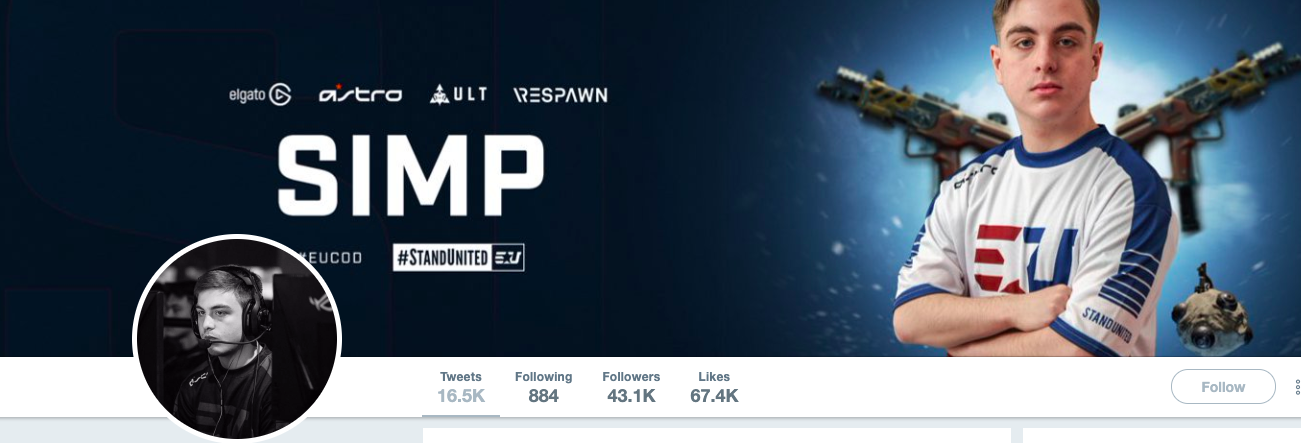
Simp's Twitter header is him standing cross-armed in front of COD guns on the right.
Call of Duty player Simp’s Twitter features the gamer wearing an eUnited shirt in his cover photo. Over 40,000 people follow his account, which he uses to post updates, eUnited news, and personal life updates. Image courtesy of Twitter.

YOUTUBE

The Gaming section on YouTube has 82.5 million followers. On this platform, you can share highlight videos, reaction videos to games or news, and so much more. Your YouTube channel might require a little more upkeep than your other social media platforms because you have to make tons of videos, but it’s worth it. 

CONTENT TO KEEP YOUR FOLLOWERS CONTENT

There are certain kinds of content your followers want to see, so make sure to give the people what they want. Keep in mind that people will expect consistent posts from you. If you don’t give them what they want when they want it, they might stop following you. So, whatever you post, make sure to be consistent about it.

STREAM ANNOUNCEMENTS

Obviously, your fans are your fans because they like to watch you play video games, so they’re going to want to know when you’ll be streaming. This is a great, easy way to get people’s attention.

Game covers are blurred in the background with the words "Watch live gaming & chat" and "Twitch.tv" clear and in white.
Announcing when you’re going to stream will attract followers to your page. Image courtesy of Microsoft.

A BEHIND-THE-SCENES LOOK

People like to know that those they look up to are, in some ways, just like them. Sharing a song you like or posting pictures with friends or family are two ways to connect with your followers. While your fans are there mainly for the gaming part of your life, they like to know that you have other hobbies and live a normal life, too.

OPINION PIECES

Your followers want to hear what you have to say about the game(s) you play. Create videos in which you review a game and talk about your experience or tweet about your expectations for a game that’s not yet released. There are plenty of options when it comes to sharing your opinions, so why not get them out there?

If you’re having trouble branding yourself, Boosted can help. They’ll create esports logos, make a place you can sell e-commerce, and just help you overall with the brand-building process.

Point Park University Hosts Steel City Showdown

Back in March 2019, Point Park University’s Rowland School of Business announced it would be hosting an esports tournament in May. Two big names in the sports world — the Pittsburgh Penguins and the Cleveland Cavaliers — were partners of the event. AbleGamers Charity, a nonprofit organization that helps people with disabilities have access to video games, also helped out. The Pittsburgh Penguins Foundation, iHeart Media and Walmart were sponsors.

Tickets cost $5 for spectators, $10 for competitors in Super Smash Bros., and $20 for competitors in NBA 2K19 and NHL 2K19. So, what happened at the tournament? What might this mean for the future of esports in Pittsburgh? We’ll answer those questions and more in this article:

  • An Overview of the Tournament
  • Point Park and Esports
  • The Future of Esports in Pittsburgh

AN OVERVIEW OF THE TOURNAMENT

The Steel City Showdown occurred May 10-12 at the Pittsburgh Playhouse, Point Park’s own Performing Arts Center. Over 500 people, both participants and observers, came to the event, which featured competitions in three games: Super Smash Bros. Ultimate, NBA 2K19, and NHL 2K19. Students, faculty, and staff of Point Park University helped out during the event, volunteering at the ticket booth or posting content on social media.

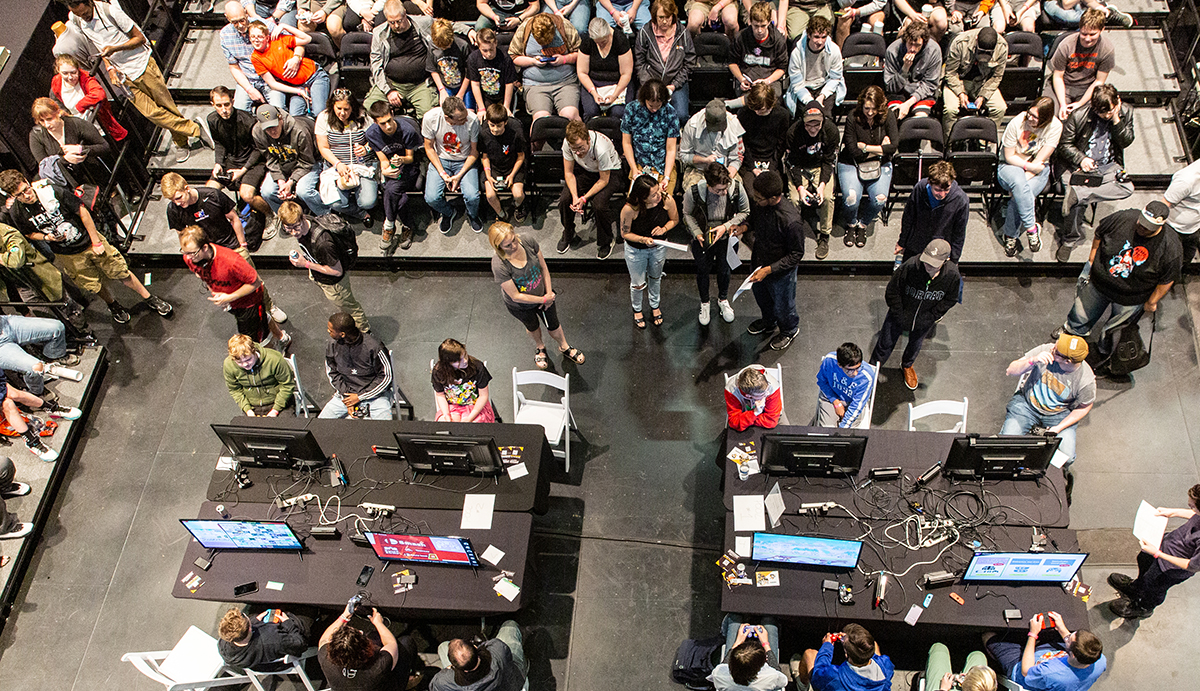
A picture taken from above shows an audience of at least 50 people watching two gaming stations in the middle of the room.
An overhead shot of the tournament shows participants at gaming stations and audience members watching and socializing. Image courtesy of Point Park University.

Prizes were awarded as follows:

  • First Place: $700
  • Second Place: $300
  • Third Place: $200
  • Fourth Place: $100
  • Fifth and Sixth Places: $75
  • Seventh and Eighth Places: $25

Now, let’s see what the results of each game were.‍

NBA 2K19

The Cleveland Cavaliers helped with the facilitation of the NBA 2K19 tournament. The winner of the Steel City Showdown NBA 2K19 competition was Jalen Lewis-French, a 23-year-old from McKeesport. He received $700 and some new gaming equipment. Lewis-French dreams of becoming a professional gamer, so this success was certainly a step in the right direction.

SUPER SMASH BROS. 

Super Smash Bros. was the most popular game at the tournament. 202 gamers registered to compete, and 150 fans watched the competition from the main viewing area.

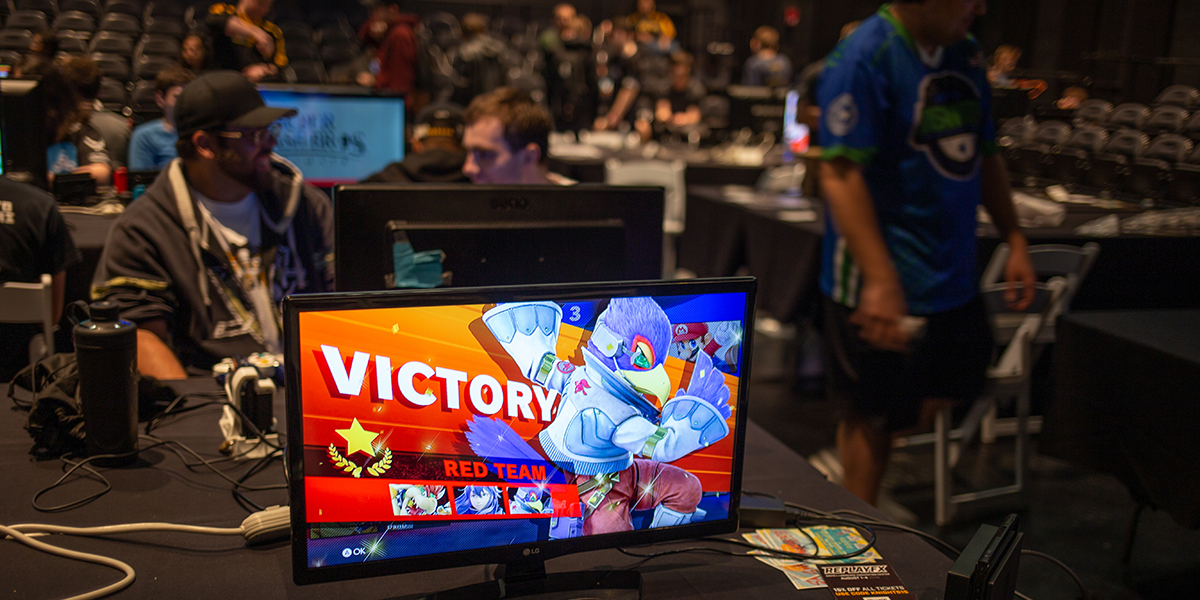
A television screen shows the Super Smash Bros. character Falco and reads "victory."
A TV screen reads “victory” for the Red Team. Image courtesy of Point Park University.

The finals for Super Smash Bros. was held on Sunday, May 12, at the PNC Theatre, which features two large projection screens. Colin “colinies” Landals was the winner of the Super Smash Bros. Ultimate competition.

NHL 2K19

This is the second year that the National Hockey League is involved with esports. They hosted the first NHL Gaming World Championship in 2018. The NHL Gaming Championship features players from the United States, Canada, and Europe, with the winner being considered the best player in the world. This year’s championship just finished up mid-June. 

The NHL figured the Steel City Showdown was a great opportunity to get involved and help host a tournament — and they were right.  

David Roebuck, the runner-up of last year’s NHL Gaming World Championship, attended the Steel City Showdown. The Pittsburgh native hoped to come out on top this time. He faced Brian Donald, another one of the best NHL 2K19 players who also happens to be from Pittsburgh.

The two had played against each other online multiple times, but the Steel City Showdown marked the first game against each other in-person. The match was a close one and could have gone either way. In the end, Roebuck won, allowing him to advance to the semifinals. His luck stayed with him, as he emerged as the winner of the NHL 2K19 competition.

POINT PARK AND ESPORTS

Point Park University is no stranger to the esports world. “The Wood Street Zombies eSports Club” was established by Ethan Green during the fall 2018 semester. While Point Park was initially upset that the team played under the university’s name, after a conversation with Green, they became interested. Thus, the club was founded.

Also during the fall 2018 semester, students at Point Park University had the opportunity to take a new course — The Business of Esports. Taught by Charles Berry, J.D., owner and attorney of Charles Berry Consulting, the course is one of the only ones of its kind to be offered in the region. Most of the students who took Berry’s esports class are studying Sports, Arts & Entertainment Management (SAEM) at Point Park.

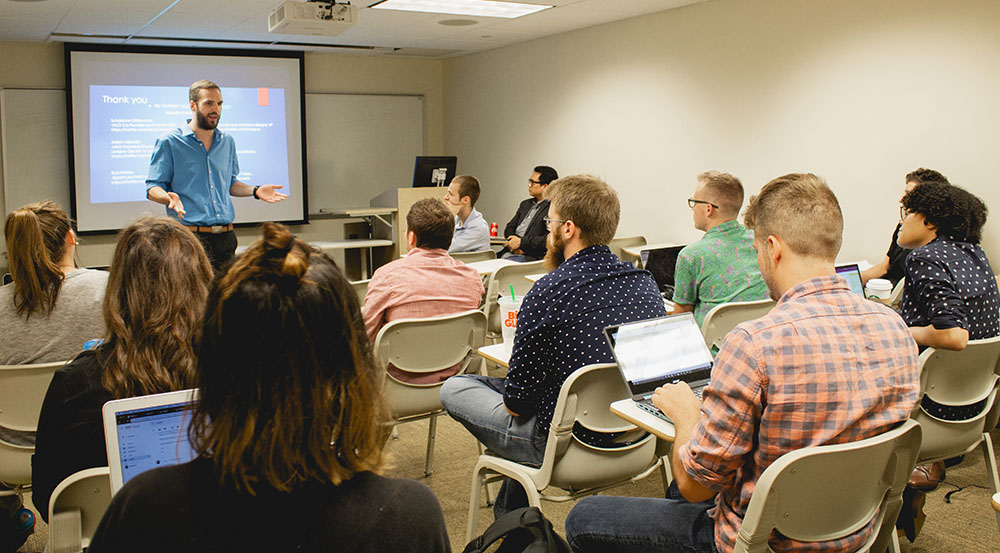
Berry stands in front of a classroom, lecturing to a class of about 10 people.
Students in Berry’s “The Business of Esports” class take notes during a lecture. Image courtesy of Point Park University.

The fall 2018 semester at Point Park was a busy one. The Rowland School of Business also hosted a Super Smash Brothers tournament on campus, the winners of which gained a spot on the Point Park Super Smash Bros. eSports team.  

Steve Tanzilli, dean of the Rowland School of Business, hopes to expand esports at Point Park in the near future. The club, the course, and the Steel City Showdown are only the beginning.

THE FUTURE OF ESPORTS IN PITTSBURGH

Len Komoroski, CEO of the Cleveland Cavaliers professional basketball team, believed this might have been the first esports event gamers from the Pittsburgh area had attended. 

Aside from this tournament, though, there are very few esports events happening in Pittsburgh. The Steel City Showdown was pretty much a test run to see if Pittsburgh could be a city where esports competitions could be held regularly. With over 500 participants and observers at the city’s first tournament, it’s safe to say there is a promising future. 


Pittsburgh is also home to Boosted, a platform that helps gamers monetize their services. If you’re a professional gamer looking to get paid for streaming, reach out to them. They can help you build your brand, get paid, and so much more.

What to Expect from Esports in 2019

We’re already halfway into 2019, but that doesn’t mean esports is done growing. The industry has been predicted to surpass $1.1 billion by the end of this year. With games coming out of nowhere and being very successful to esports tournaments with massive prize pools, there’s still much we can expect from the esports industry for the latter half of the year. Here’s what we’ll talk about in this article:

  • What Games Are Doing Well
  • Tournaments and Events to Watch
  • Predictions for the Rest of the Year

WHAT GAMES ARE DOING WELL

Real-time strategy (RTS) and multiplayer online battle arena (MOBA) games are the two most popular games in the esports industry. Warcraft and Age of Empires are two popular RTS games, while League of Legends and Strife are two MOBA games that players love.

In 2019, a few fighting and shooter games — specifically battle royale games like Super Smash Bros. Melee — are predicted to gain popularity. In addition, there is a growing interest in racing and sports games like FIFA 19 and Madden NFL 19.  

As mentioned in the introduction, there is a game that came out of nowhere and is now extremely successful. That game is Apex Legends. At the end of 2018 when analysts were predicting which games would be popular in 2019, no one listed Apex Legends — because no one had ever heard of it. 

The game was only introduced in February 2019. With no marketing whatsoever, Apex Legends hit 25 million players only a week after its release. By the end of February, it averaged almost 218,000 viewers on Twitch, making it the #1 live-streamed game on the website.

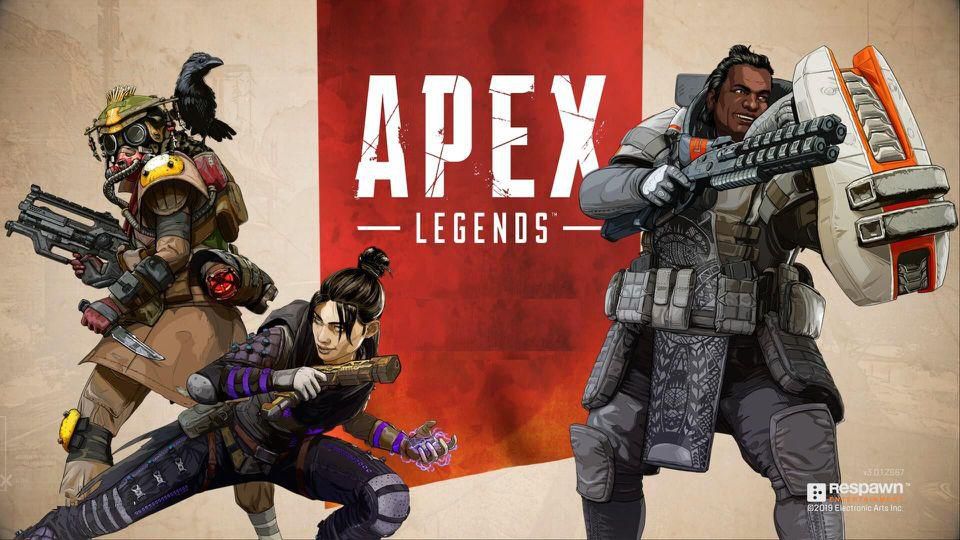
Three characters are shown, two on the left and one on the right. In the center reads Apex Legends.
Apex Legends came out of nowhere and made it to the top of the charts — quite the success story! Image courtesy of Forbes.

So far, the top three games of 2019 are:

  1. Fortnite
  2. Counter-Strike: Global Offensive
  3. Dota 2

Fortnite currently leads the charts, earning over $10.5 million. Counter-Strike has earned $6.9 million, with Dota 2 at a close third with $6.8 million earned. 

Will any of these games change status as the year goes on? With Fortnite almost $4 million ahead of the second place game, it’s hard to imagine a game overthrowing it. But, as we’ve seen many times in the esports world, anything can happen.

TOURNAMENTS AND EVENTS TO WATCH

Tournaments and championships are on the rise. Here are a few events happening this year that you might want to pay attention to.

FORTNITE WORLD CUP FINALS

When: July 26-28 

Where: New York City

Prize: $30 million prize pool

Organizer: Epic Games

Website: https://www.epicgames.com/fortnite/competitive/en-US/events/world-cup/landing

LEAGUE OF LEGENDS WORLD CHAMPIONSHIP

When: TBD (usually around October/November)

Where: Paris, France

Prize: TBD (was $2.25 million in 2018)

Organizer: Riot Games

Website: https://na.leagueoflegends.com/en/

OVERWATCH WORLD CUP

When: July 13-14 (player tryouts; finals usually around August)

Where: Anaheim, CA

Prize: $5 million

Organizer: Blizzard Entertainment

Website: https://worldcup.playoverwatch.com/en-us/

PREDICTIONS FOR THE REST OF THE YEAR

What can we expect from the latter half of 2019? Well, it’s hard to know for sure, but there are a few predictions that are similar across the board. Let’s take a look.

A $1.1 BILLION INDUSTRY

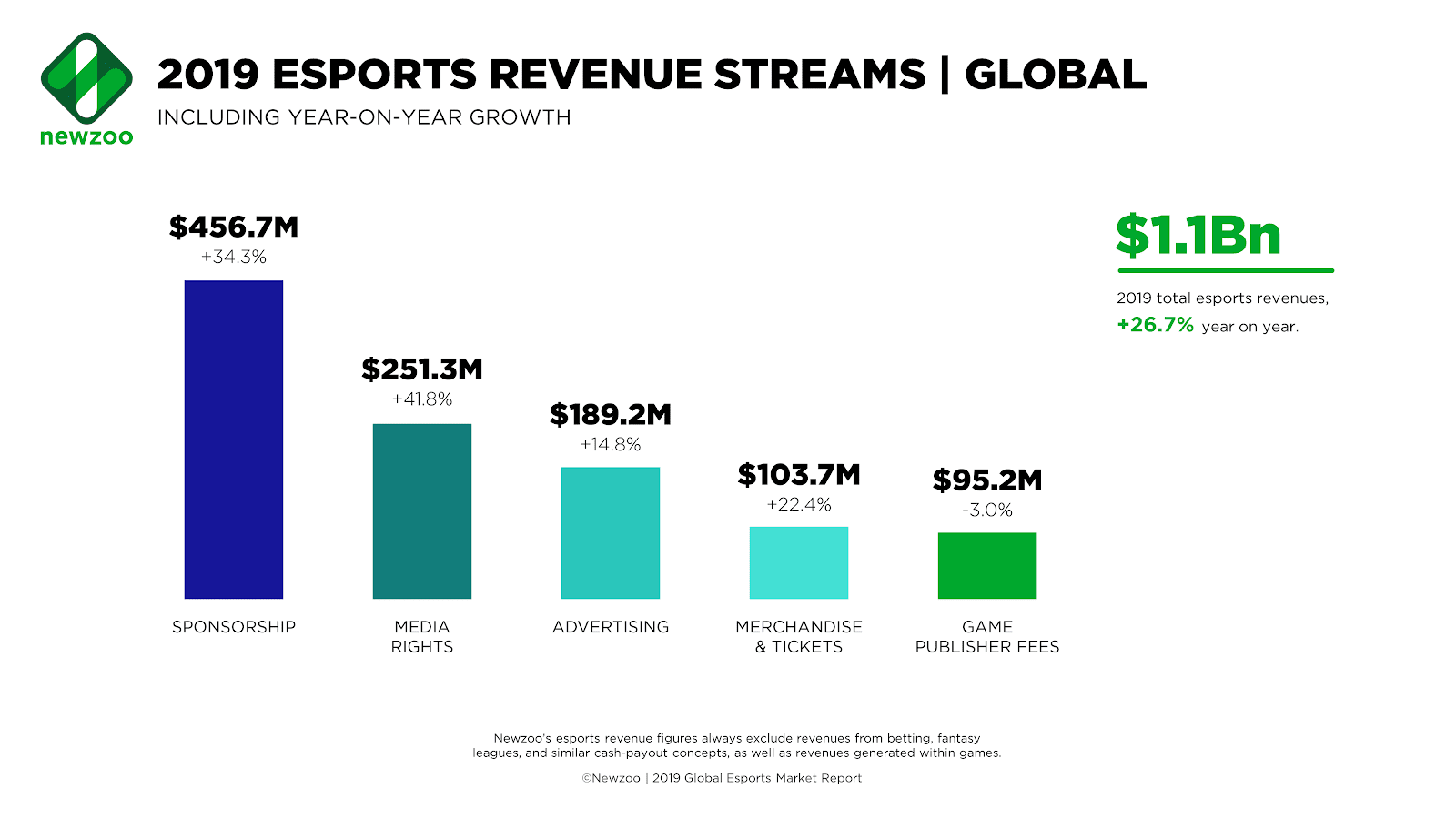
Like mentioned in the introduction, the esports industry is supposed to surpass the $1 billion mark this year. In 2018, the industry made $906 million, so you can see that the industry is growing quickly.

A chart titled "2019 Esports Revenue Streams: Global" shows the amount of money made from sponsorship, media rights, advertising, merchandise and tickets, and game publisher fees.
Most of the revenue made this year is expected to come from sponsorships, making up almost half of the $1.1 billion. Image courtesy of Newzoo.

MORE SPONSORSHIPS AND MORE VENUES

Endemic sponsors are those whose products or services are somehow related to the esports industry. Non-endemic sponsors, on the other hand, are the opposite and, therefore, have nothing to do with esports.

Some examples of endemic sponsors are Alienware and Logitech, while Adidas and Geico are two non-endemic sponsors who have made their way into the esports industry.

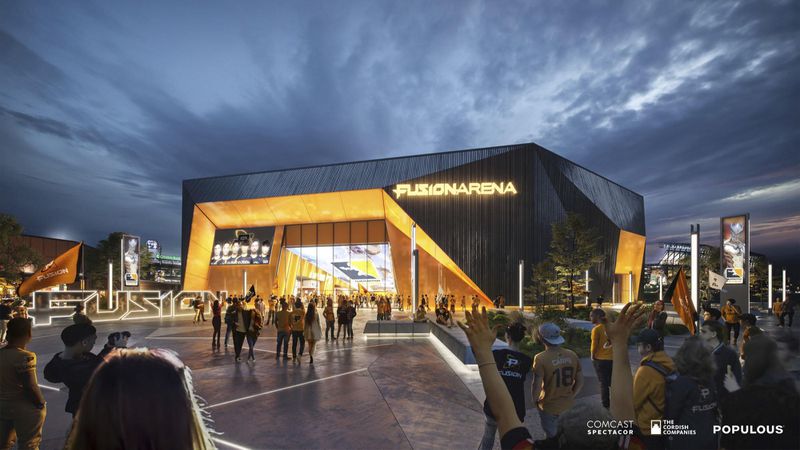
There are also more venues being built. In March this year, Comcast Spectacor, who owns the Philadelphia Flyers hockey team, is going to build the first esports arena in the United States. Aside from being home to the Philadelphia Fusion esports team, other gaming events will be held there, too.

People stand outside a Fusion Arena, a black and yellow building.
Comcast Spectacor’s vision for the new Fusion Arena. Image courtesy of The Morning Call.

TRADITIONAL SPORTS TEAMS + ESPORTS TEAMS = ONE BIG, HAPPY FAMILY

Traditional sports teams have been dipping their feet into the waters of the esports industry for a few years now. For example, the Miami Heat invested in Misfits, a European esports organization formed in May 2016. The investment came in January 2017, not even a year after the team’s formation.  

Will more professional sports teams invest in the esports industry in 2019? Most likely, the answer is yes. We’ll just have to wait and see which ones step up to the plate.

WILL NORTH AMERICA BE THE LARGEST ESPORTS MARKET?

While China is predicted to become the second-largest region in terms of revenues in 2019, overtaking Western Europe, North America still remains the dominant market for esports.

In 2018, the United States of America reached esports revenue of $409.1 million. Sponsorship will make up the largest portion of North America’s esports revenue, totaling a predicted $196.2 million. Plus, there are 23.9 million esports fans in North America that are predicted to generate about $17 per fan. 

The esports industry is not slowing down anytime soon. So, if you’re sitting here after reading this article thinking about how you should get involved in the esports industry, Boosted can help. With knowledge of the industry and plenty of esports marketing tactics, they can bring your brand to life, help you get sponsored, and so much more.

How to Get Paid for Streaming

A professional streamer who plays video games full-time — 40 hours a week — can earn $3,000 to $5,000 per month, and this only from the subscriber’s button. This doesn’t account for what those players receive in donations or make from ad revenue.

While it won’t be easy, there are ways you can make that same amount of money doing the same thing — streaming video games. Here’s the rundown of what we’ll talk about in this article:

  • Earn Money Bit by Bit
  • Don’t Forget to Like and Subscribe
  • Make Your Channel Donation Nation
  • Get Sponsored

EARN MONEY BIT BY BIT

Back in June 2016, Twitch introduced Cheering, which is a way for fans to support their favorite streamers. A Cheer is a chat message that uses Bits, which are animated emotes available for purchase.

Simply by watching a 30-second ad, viewers can earn anywhere from five to 100 Bits. If you run out or want more, you can purchase them via Amazon Payments — 100 Bits cost $1.40.

So, when exactly do viewers use Bits? The good news is that they can cheer for you at any point during your stream! While it’s common for viewers to cheer whenever they like something specific a streamer did, they don’t have to limit it to just then.

To use Bits, a viewer types “cheer” followed by a number — for example, “cheer100” — into the chat box, which costs the viewer $1.40. However, viewers can Cheer any amount they want, with the limit being “cheer 10000.” That would cost a viewer $140, and the streamer would receive $100.

Cheering benefits the streamers and the viewers — talk about the best of both worlds! Obviously, the streamers benefit by receiving the money. Viewers who frequently Cheer on their favorite streamers earn Cheer Chat Badges. Often, streamers will shout out those who cheer for them, too, so viewers get the added bonus of recognition, too.

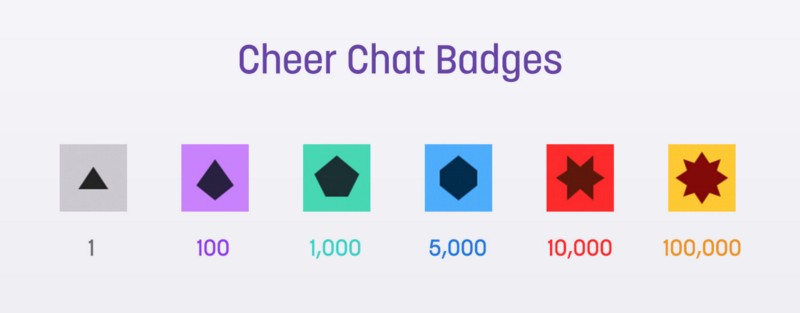
Cheer Chat Badges are as follows: 1 (gray), 100 (purple), 1,000 (green), 5,000 (blue), 10,000 (red), and 100,000 (yellow).
There are six Cheer Chat Badges that viewers can earn, depending on how often they cheer for their favorite streamers. Image courtesy of Twitch.

DON’T FORGET TO LIKE, SUBSCRIBE, AND ADVERTISE

In order to have a subscribe button on your page, you need to become a Twitch Partner or Twitch Affiliate. If you have at least 500 regular viewers, you can apply to be a Twitch Partner.

With the Twitch Partner status comes the “subscribe” button; each time a viewer clicks that button, Twitch gives you about $2.50 per month.

Basically, a Twitch subscription is a scheduled, monthly donation of a certain amount of money. You can choose between $4.99, $9.99, or $24.99, and Twitch and you split that right down the middle.

A finger hovers over a "subscribe" button.
Make sure that you mention in livestreams that the subscribe button is only available on the website. Otherwise, the people watching on the Twitch console or mobile app won’t be able to subscribe.

With a Twitch subscription, you can also advertise on your page. For every 1,000 views an ad receives, Twitch pays you about $2. If you’re a smaller channel that doesn’t have a ton of subscribers, this might not prove a very reliable source of income. However, if you continue to grow your subscriber count, this a way you can earn a little bit of extra cash.

MAKE YOUR CHANNEL DONATION NATION

Adding a donation button to your channel is something every Twitch user can do. However, just because you have one doesn’t necessarily mean that you’ll profit from it.

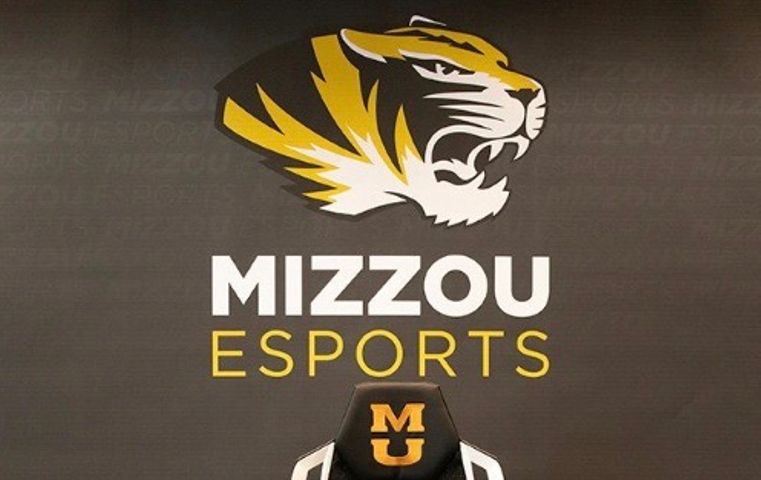
Donations can range anywhere from $1 to thousands of dollars. For example, an anonymous donor recently gave $130,000 to the University of Missouri esports team. This will help pay for scholarships, travel costs, and renovation of the facility.

This shows "Mizzou Esports" with the mascot, Truman the tiger, above.
The anonymous donation to the University of Missouri esports team came at the beginning of May 2019 and will allow the organization to provide more scholarships for players. Image courtesy of KOMU.com.

While you obviously want your donation button on your page, you don’t want it to overwhelm your page. If viewers want to donate, they will find the link.

No matter the donation amount you receive, you always want to be appreciative of it. Taking the time to thank the viewers who donated money to you will show them you care.

Donations go through PayPal, which means they aren’t protected by Twitch like, say, bits. That being said, you want to air on the side of caution with donations. Those who donate have 180 days to file a dispute with PayPal, so make sure you don’t spend the money until after that amount of time.

GET SPONSORED

Being sponsored by a brand is another way you can make money as a streamer. This means that gamers somehow need to promote the sponsor’s product, whether it be by shouting it out during a stream or wearing merchandise with the brand’s logo.

Sometimes, sponsors will reach out to you and ask if they can sponsor you, but more often than not it’s the other way around. So, how exactly do you get sponsored? Lucky for you, we have a whole article dedicated to just that.

While you might not be making over $300,000 per year — which is what is rumored some of the most popular streamers make — these are ways you might be able to make a little bit of extra cash.

Plus, there are other benefits, too. Getting a Cheer or receiving a donation from a viewer can boost your self-confidence and make you feel good about yourself and your gaming abilities. Both of those are ways that viewers can say, “hey, I like what you’re doing.” And, you get paid for it. That’s esports marketing 101, folks.

How to Get Sponsorships from Streaming

Sponsorships are a wonderful way for esports players to build their identity and gain attention. However, if you’re new to the esports industry, or even if you’re a seasoned veteran who just never learned about this, you may be wondering how to get sponsorships from streaming. Don’t worry; we have you covered! In this article, we’ll talk about:

  • What Is a Sponsorship?
  • What’s the Point of Being Sponsored?
  • 6 Steps to Getting Sponsored

WHAT IS A SPONSORSHIP?

Let’s start off basic, as you might want to know a sponsorship actually is. Usually, a sponsorship is some form of agreement between the streamer and the brand. Sponsorship contributed almost $360 million to the worldwide esports revenue in 2018. By 2021, sponsorship in North America alone is expected to be $162 million, which will make up a majority of the revenue.

Not all sponsorships are the same; some people might have a banner that can be seen during streaming, or others might wear clothing or accessories that sport a brand’s logo. The latter being featured somewhere in the stream is the most common route of sponsorship. However, you can work with your sponsor to decide how to promote content in a way that most benefits your stream.

If you’re sponsored by a brand, a company, a team, or another player, you’ll be paid to advertise their products or services on your stream. For example, Michael Grzesiek, “Shroud,” partnered with Postmates. A frequent user of the food delivery service, the gamer will give fans and followers surprises during streams.

Popular gamer Michael Grzesiek, also known as "Shroud," partnered with Postmates and offered free delivery credits with a special code. He is pictured here wearing sunglasses and his reaper tee (which fans can buy).
Postmates offered $100 in free delivery credits to people who were new to Postmates and who used his code “SHROUD” when ordering. Image courtesy of Postmates.

You might be apprehensive about being sponsored; perhaps you worry that your viewers might not want to see advertisements while watching your stream. You can rest easy — 80 percent of Twitch users support brands sponsoring a gamer or team, and 82 percent believe that sponsorships are beneficial to the gaming industry.

WHAT’S THE POINT OF BEING SPONSORED?

Have you ever heard the saying, “choose a job you love, and you will never have to work a day in your life”? If you’re someone who streams themselves playing video games full-time, chances are you’d appreciate being paid for it.

That’s exactly the point of being sponsored. Being sponsored by a brand is a way to make money, and who doesn’t love that? Simply by advertising a brand’s product or service while you stream, you could make money.

There are other benefits to having a sponsored stream, too, ones that you may not necessarily realize at first. For example, if you have a well-known brand doing your sponsoring, you, in turn, will gain credibility and professionalism, all because you’re associated with a brand’s name.

As mentioned before, advertising doesn’t bother your viewers, and now you know that it is a way for you to make money; what more could you want?

6 STEPS TO GETTING SPONSORED

You might be thinking, “I don’t have a lot of followers, so I’m never going to get sponsored by a brand.” That’s not the case at all. Keep reading to see what steps to take in order to get sponsored.

STEP 1: LOOK PROFESSIONAL

The first step is a crucial one. You want your stream looks as clean, professional, and unique as possible. You might not think anyone cares about the look of your page, but they do.

Imagine this: a potential sponsor learns about you and has thoughts about sponsoring you. If they come across your stream and see a messy page with poorly-designed graphics, they might change their minds completely.

First impressions matter, so you want your channel to look as good as possible. It’s a good idea to have:

  • An updated “about me” section
  • Ways to get in contact
  • Links to social media pages — if relevant
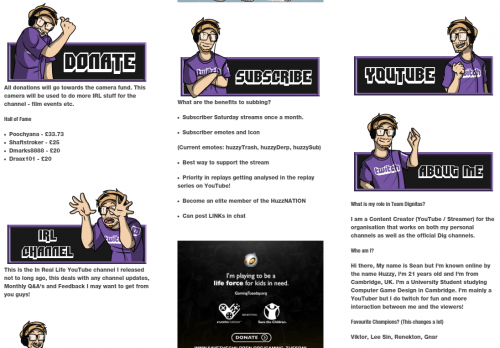
HuzzyGames' profile is divided into different sections: Donate, IRL Channel, Subscribe, Youtube, and About Me. Each section features an animated persona as well as information.
HuzzyGames’ profile is divided into sections, including a nice balance of text and images, that is overall appealing to the eye. Image courtesy of TwitchMeta.com.

STEP 2: START LOOKING FOR POTENTIAL SPONSORS

The possibilities of brands who could sponsor you are endless. While you might want to be sponsored by an endemic brand, don’t limit your options. Plenty of non-endemic brands, such as food and drink and car companies, are available and willing to sponsor you, too.

So, what do you do? You can start by making a list of brands you know sponsor other players, like Coca-Cola and KFC. Also, go through Twitch or YouTube and make note of what brands come up. Again, though, don’t limit your list to major corporations; there are plenty of smaller brands that are trying to get their foot in the door.

Before you reach out and get involved, do your research. Make sure that the brand is trustworthy. You don’t want to get involved with the wrong people.

STEP 3: REACH OUT AND GET NOTICED

Your next task is to find the person with whom you need to get in contact. A word of advice: don’t use the company’s generic contact form. The person who responds to those messages might not be the person you want to talk to.

Instead, use social media, LinkedIn, or the company’s website to find the right person. Search for keywords in a person’s title, such as “talent seeker” or “marketing director,” as those are the people who will probably be able to help you.

Once you find someone who you believe is in charge of sponsorship deals, reach out and get noticed. Don’t send your proposal right away. Instead, give a brief introduction of yourself and try to build a connection with this person.

This process doesn’t always happen overnight; sometimes, it can take weeks for someone to reply. Don’t get discouraged! However, if you feel like you’ll never receive a response, you can always repeat this step with another person.

STEP 4: SEND A MESSAGE

Once the person you contacted replied — and you’re sure it’s the person in charge of looking over proposals — now it’s time to send your proposal. When composing your email, the main point is to emphasize what the brand would gain from sponsoring you.

Here are a few tips to keep in mind while you write your proposal:

  • Talk about your audience → If you don’t have a huge amount of followers, be honest, but highlight the loyalty and sense of community you have with your viewers. Tell them how long your viewers have been with you. If possible, include statistics on gaining viewers.
  • Be professional, yet conversational → Keep your tone the perfect balance of professional and friendly. Brands don’t want to sponsor someone who seems too stoic — they want someone with personality, someone who is unique.
  • Tell them what you can do for them → Brands are constantly being sent proposals by gamers, so why should they care about the one you send? Tell them why your stream is special. Give specific, detailed examples of how you can benefit them. Show them why they should pick you over someone else.
A man drafts an email on his computer.
When writing your proposal, be professional, be friendly, and be persuasive.

STEP 5: NEGOTIATE THE TERMS, OR TRY AGAIN

If you don’t get a sponsorship deal from the person you contacted, don’t fret. Consult your list of brands from step two and go through steps three and four again.

However, if you did get a response — and a good one, for that matter — now it’s time to negotiate the terms of your contract. This step will be different for everyone, as contracts differ among brands. You might be super excited and want to get this sponsorship in place as soon as possible, but don’t rush into things. Take the time you need to negotiate the terms, whether it be how much you make or how long the sponsorship will last.

STEP 6: SIGN THE CONTRACT

The final step is to sign the contract. Like mentioned in step five, don’t rush into things. Make sure there aren’t any questionable clauses in there. This is where an esports agent might come in handy; they help you identify those questionable areas and make sure you aren’t cheated or taken advantage of.

The most important part is making sure that you don’t give up rights to your channel/stream. Those are all yours, and no one else’s. Not even the sponsor’s. Once you’ve looked over the contract and you know everything’s perfect, you’re ready to sign.

If you’ve followed all of the above steps and you’ve signed your contract, congratulations! You’re now getting sponsored for streaming. If you have questions on how to get a gaming sponsorship, contact one of our professionals. They can get you in contact with some great companies, like Spotify and Dropbox, and, most importantly, help you find sponsorships.

How Your Company Can Start Advertising in Esports

Roughly 20 years ago, many people considered advertising in esports to be a risky investment. There was no certainty that advertisements would be seen by viewers, and people were unsure if the industry would amount to anything major.

Today, however, this industry is one that is continuously thriving, and that only means one thing: there are plenty of new opportunities for companies to get involved. For example, Boosted is a company that helps gamers find brands that work with their vision and style.

Here’s what we’ll cover in this article. After reading, you’ll be ready to get your company involved in advertising.

  • Why Advertise in Esports?
  • Popular Brands Who Already Advertise Successfully in Esports
  • What to Know Before Getting Involved
  • Steps You Can Take to Make Sure Your Company Thrives

WHY ADVERTISE IN ESPORTS?

Between 2016 and 2017, there were 600+ sponsorship deals made across the esports world. This just shows how many opportunities there are for companies to get involved.

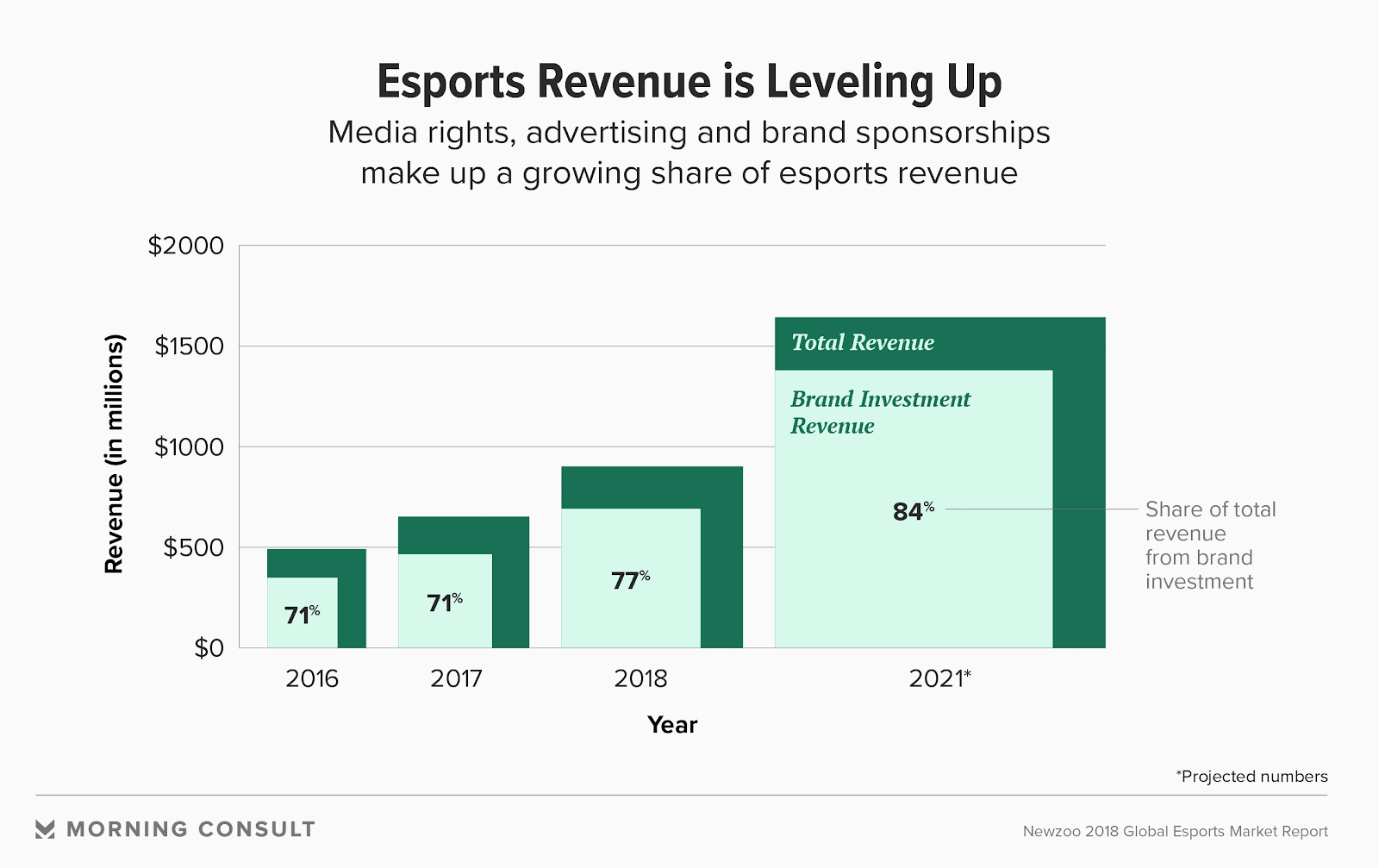
This graph titled "Esports Revenue is Leveling Up" shows how much revenue is made each year, as well as how much of that revenue is from brand investment.
Brand advertisements in esports make up roughly 77 percent of revenue. Image courtesy of Morning Consult.

Advertising in esports is often said to be no different than advertising in professional sports, which might relieve some of the anxieties that come with this unknown territory. Some people even predict that the esports industry will someday be as well-known as the athletic fields, so the time to get your company involved is now.

POPULAR BRANDS WHO ALREADY ADVERTISE SUCCESSFULLY IN ESPORTS

While advertising in esports is still a developing field, there are quite a few companies who have already managed to get their foot in the door and start successfully advertising. Below are a couple of examples.

ARBY’S

In 2016, the fast-food restaurant signed on to serve as the official food chain of ELeague. They released commercials that featured their food blowing up. One of the commercials focuses on Arby’s Smokehouse Brisket sandwiches. A camera pans across a row of sandwiches that begin to unexpectedly explode.

Another commercial shows the company’s famous curly fries sitting undisturbed in the center as the camera zooms out, leaving viewers wondering when they will explode. The chain’s spokesperson Ving Rhames narrates the commercials and uses gaming language to appeal to the audience.

These poor curly fries from Arby's have been blown up as part of an esports-related advertisement.
This screenshot from the video captures the fast food chain’s famous curly fries in the midst of an explosion. Image courtesy of iSpot.tv.

RED BULL

The popular energy drink company became involved with esports back in 2008. Since then, they have been an active participant in the esports world. They host esports events, sponsor players, and even have their own social media — Facebook, Twitter, and YouTube — dedicated to just esports.

WHAT TO KNOW BEFORE GETTING INVOLVED

Before you begin advertising in the esports world, there are a few things you’ll want to know.

The most common approach of advertising has involved brands sponsoring individual players, but that is now changing. What’s to prevent brands from sponsoring whole teams or leagues? This is something you might want to take into consideration when deciding what you want to advertise.

Audience members often prefer endemic over non-endemic brands, meaning they like to see esports-related advertisements over outside brands. However, plenty of food, drink, and car companies — like Arby’s, Red Bull, and Honda — have had success advertising in this industry.

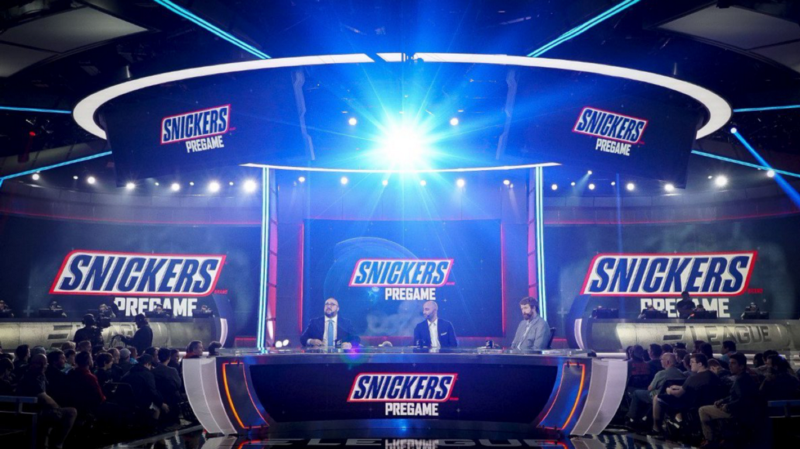
Snickers has been advertising in esports for years. This image shows a studio in which announcers are covering ELeague's pregame. Featured six times is "Snickers Pregame."
The popular candy bar Snickers has been successfully advertising in esports. Here, they are shown sponsoring ELeague’s pregame coverage. Image courtesy of Medium.

Most of the esports audience ranges from 18-34 years old, so advertisers often have to revamp their current strategies and find an approach that works best for this audience. However, the young age range means that brands who commit wholeheartedly from the very beginning will have great success; the audience can tell when brands aren’t fully invested and are only in it for a short-term profit, and they’ll reject them.

Like its audience, the industry itself is young, and brands often refer to it as a lawless land where anything can happen.

STEPS YOU CAN TAKE TO MAKE SURE YOUR COMPANY THRIVES

With knowledge from the previous section in mind, you’re almost ready to start advertising. However, you might want to immerse yourself and your brand in the esports world before diving right in. Here are some steps you can take to make sure your company does well.

GET ON TWITCH

The largest streaming platform for esports recently announced that it will no longer offer “universal ad-free viewing,” even for Twitch Prime members. The rationale for this decision is that this will allow advertising to expand and become a bigger part of the esports world.

Spending some time on Twitch by watching a livestream or chatting with gamers can allow you to see how the industry works. Plus, this allows you to see how other brands advertise themselves and how the audience reacts to their advertisement strategies. You can even create your brand’s own Twitch account and interact with other players. Audience members spend an average of 100 minutes on Twitch per session, which allows for endless advertisement opportunities.

GET CONNECTED

Like previously mentioned, players and audience members can easily tell when companies are not seriously invested in the industry. So, get involved and get connected. Find your niche and see which individual or team would be the best target for your brand. Talk to players and audience members who have extensive knowledge of the industry, and get to know them. If they know that you’ve done your homework and that you’re in it for the long run, they’ll probably reward you and help you out down the line.

Esports arenas are being constructed across the United States, which allows for even more chances to advertise. Companies can hand out goodie bags with promotional items or participate in live-event sponsorships. Plus, when it comes to live events, about 60% of esports fans expressed interest in attending.

Have questions? Talk to us, because advertising in esports is taking off. Jason Lake, the owner of CompLexity Gaming, states, “the question today isn’t ‘if’ my company should market in esports, but ‘when.’” So, if you’re wondering when you should start advertising, the answer is now.

What to Look for When Choosing an Esports Agent

Do Your Research to Make Sure You Get the Best Agent Possible

Professional football players have agents. Professional basketball players have agents. Professional golfers have agents. It only makes sense for professional esports players to have agents, too. In this industry that only has continued to grow over the past few years, legal representation for players is important now more than ever. How do you know what to look for in an agent, though? In this article, we’ll tell you everything you need to know about choosing the agent who’s right for you. 

  • A Rapidly Growing Industry
  • The Role of an Esports Agent
  • What Happens After a Contract Expires?
A PlayStation controller is in focus, while a game involving a car is part of an out-of-focus background.

A Rapidly Growing Industry

The esports industry is one that has been growing and booming for a few years now. In 2016, roughly $900 million was produced by esports world, and there were about 300 million people who watched esports. Three years later in 2019, the market is expected to exceed one billion dollars, and the audience is expected to hit roughly half a million people. 

While this rapid growth that doesn’t seem to be slowing down any time soon is good for the industry and the players, no doubt will problems arise concerning agents, contracts, and sponsorships. People now are realizing that there is money here, and sometimes people’s own selfish interests will take precedence over the well-being of the players.

Now more than ever there comes the need for esports players to have agents. However, as of now, only 10 to 15 percent of esports players having an agent or some other form of representation. 

A gamer wearing headphones looks at the computer screen where the games and chats are.

The Role of an Esports Agent

Like those of professional athletes, an esports agent’s job is to help their client to the best of their ability and look after their client’s best interests. The main job is to represent the client and make sure the player gets the best deals. Finding the agent that is best for you requires a lot of research, so here is what you should expect from an agent:

  • An understanding of contracts
  • Knowledge of how to market
  • A wide network of connections 
  • An established reputation
  • Experience in the field

Now, we’ll go into more detail about each of those points.

An Understanding of Contracts

One of the most important aspects you want your agent to be informed about is contracts. Teams, organizations, or anyone with bad intentions can easily word statements weirdly so that you, as a player, might not be able to understand entirely what they mean. That’s where your agent comes in. Someone who understands contracts can know what to look for and can spot questionable passages or statements. Contracts in the esports world are different than those in the world of professional athletes, as they do not have to be standard. Take special care to note what is in and what is not in the contract.

This is part of a rough example of an esports player contract. Official contracts will look much different, but this gives a basic understanding of what esports contracts look like. Image courtesy of Laws of Esports.

Knowledge of How to Market

One of an agent’s main job is to be the player’s marketer. Oftentimes, an esports agent serves the roles of the marketer and the negotiator. One question you want to ask yourself is: does your potential agent have marketing experience? This is important to know, as you can research to see how their style of marketing might differ from another agent’s style. Your agent’s role as your marketing professional is to help you get sponsorships, give you advice when needed, and maintain your image and likeness.

A Wide Network of Connections

Connections and networking are vital to the esports industry, as they are with other professional fields. If an agent is to properly represent their client, they need to have already made connections in the field. That way, agents can more easily negotiate deals with teams or organizations because they have people who they know can help them.

An Established Reputation

Similar to having a wide network of connections, it is important to have an established reputation in the esports world. Obviously, you don’t want an agent who is known for being unreliable, unprofessional, or unethical. Research potential agents and ask yourself questions. Does the agent seem like they can be trusted? What do others say about this agent? If possible, read up on some of the testimonials from players who have been or are currently being represented by this agent. 

Experience in the Field

When you apply for a job, oftentimes there are a few years of experience required before being able to have a certain position. The same is applicable to esports agents. Agents need to know pretty much everything there is to know about the esports world. You should feel confident that your agent knows exactly what they are doing. Sure, your agent might encounter an entirely new scenario, but they should know what to do and how to handle it. You need an agent who has extensive knowledge of the industry and how it operates.

What Happens After a Contract Expires?

Say you went through all of the steps of acquiring an agent, signing a contract, and serving out that contract with your team. Once your contract expires, what happens next? Well, there are a few options:

  • Extend your contract
  • Test your market for a few months to see what else is out there
  • Stage a buyout, in which another team would buy your contract
  • Become a totally free agent 

So there you have it. Now you know what you should and shouldn’t look for when searching for an esports agent. The main takeaway is that your agent should be respected, experienced, and professional. If you still have questions, you can always reach out and talk to our talented esports agents. Now go out and find the agent who’s right for you.

Business Financial Assistance Programs Offered By GCDC

March 2019

The Greensburg Community Development Corporation offers a number of financial assistance programs to aid new and existing businesses within downtown Greensburg. In addition, these programs support the redevelopment of properties within the city. Two of these incentive programs are the LERTA Program and the Façade Improvement Grant Program.

LERTA stands for Local Economic Revitalization Tax Assistance; this program allows local taxing authorities to provide real estate tax incentives for new businesses and the expansion of existing businesses. Property owners will realize an exemption of 25% of taxes over the ten-year life of the program. Other benefits of this program are the creation of a Greensburg Revitalization Fund (G-Fund), and the removal or renovation of tired commercial and residential properties. Since the LERTA Program’s implementation just a few years ago, several city properties have benefited from its tax incentives, including the Breakstone Apartments on College Avenue and Solevo Wellness on East Pittsburgh Street. The hotel project, the latest development project the GCDC and the City of Greensburg have been working on, would qualify for the LERTA Program.

The Façade Improvement Grant Program provides financial assistance to complete building or storefront renovation / restoration projects in the form of matching grants. Approved renovation projects receive grants, with the committee usually expecting a 50-50 matching cost basis up to $5,000. In July 2018, Mento Holdings LLC was awarded a $5,000 grant to improve their business’s storefront.

More information about these, and other, programs can be found at http://www.thinkgreensburg.com or by contacting Ashley Kertes, Executive Director of the Greensburg Community Development Corporation.

Sun Dawg Café Awarded City’s First Business Soft Cost Grant

March 2019

Beloved local restaurant Sun Dawg Café was recently awarded $4,250 from the City of Greensburg, making it the first recipient of the Business Soft Cost Grant Program. Implemented in November 2018, this program, aimed at strengthening city businesses, supplies grant funds that reimburse all or part of the soft costs associated with opening or expanding a business in the City of Greensburg. Kelsye Milliron, City Administrator, said that Sun Dawg’s “approval is contingent upon obtaining an Occupancy Permit at their expanded location and proof of payment of the fees.” With this money, co-owners Rachel and Ray Flowers plan to expand the business into the adjacent building, the former home of Trice Optical Professional Services. They hope to have 35 to 40 seats in this new space, which almost doubles the restaurant’s current capacity.

Sun Dawg opened in 2012, and the Flowers are thankful for the loyal customers and the business they have received. Co-owner Rachel Flowers said that owning a restaurant in downtown Greensburg allows for “more of an opportunity to be unique and think outside of the box.” The Flowers are also working on acquiring a liquor license, as well as increasing days on which they serve dinner. Currently, Sun Dawg only serves dinner on Thursdays and Fridays until 9:00 pm; otherwise, the restaurant is open until 4:00 pm Mondays through Wednesdays, 2:00 pm on Saturdays, and closed on Sundays. They also hope that the expansion will support their growing catering business.

City Councilman Gregory Mertz said, “Sun Dawg really wowed us with their vision to expand their Downtown Greensburg business into the neighboring property. Their proposal was designed to fit what we intended the grant to be used for – finding permanent homes for vacant storefront properties in Downtown Greensburg. I can’t wait to see the new Sun Dawg when it’s finished.” The Flowers hope that renovations will be finished by summer 2019.

Ray and Rachel Flowers, owners of Sun Dawg Café